
PTSD from Domestic Violence: The Cycle of Trauma for Girls
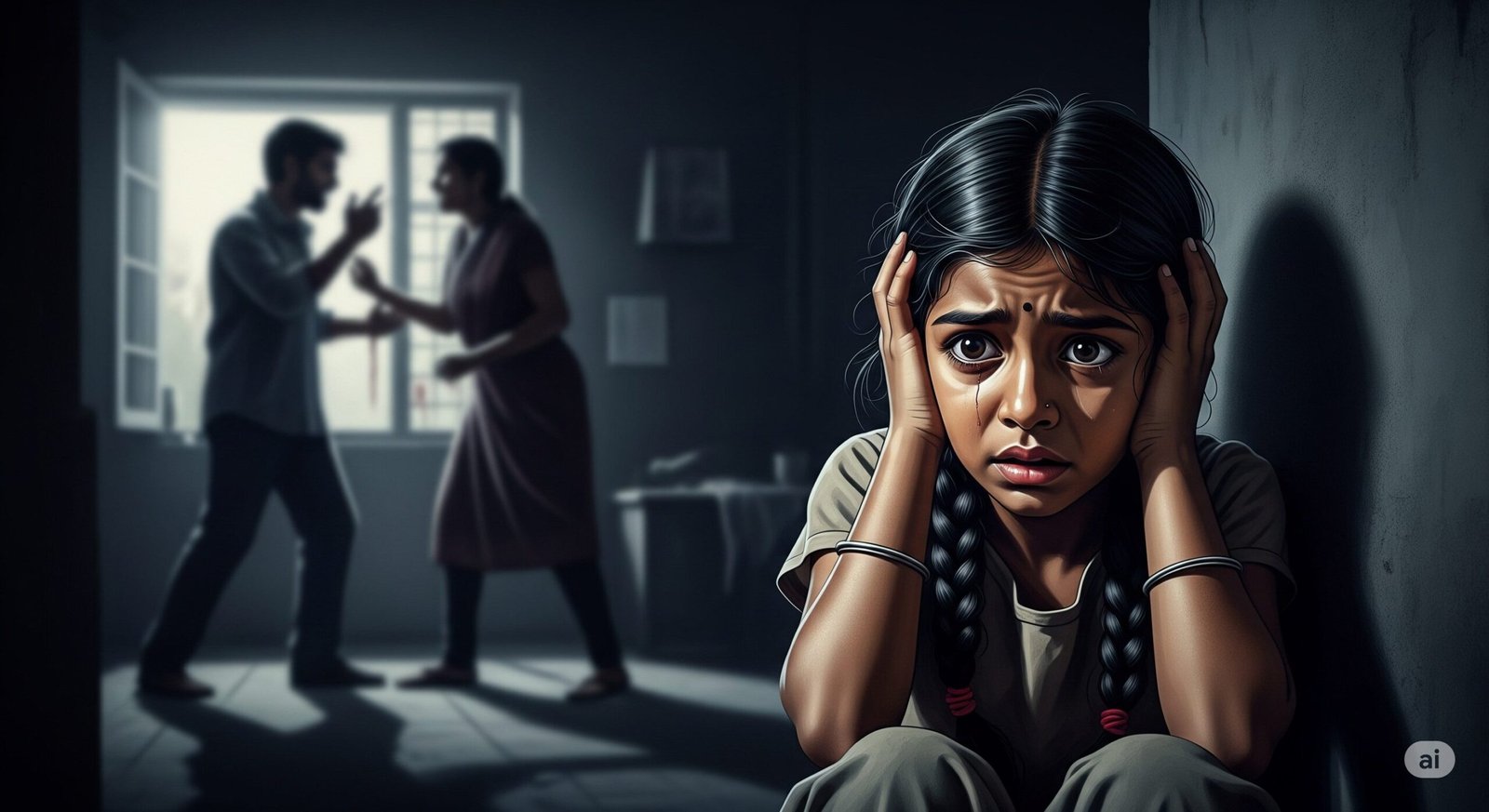
For many girls in India, the death of their mother is not a single tragedy but the violent end to years of PTSD from domestic violence that they have witnessed. A large number of maternal deaths, whether from direct violence, suicide due to abuse, or health neglect, start in abusive marriages. Long before the final loss, the daughter has been living in a home filled with fear, tension, and violence. Research clearly shows the deep negative effect this has on children’s mental health. The mother’s own stress and depression from the abuse she suffers create a “psychosocial void,” where she is physically present but emotionally absent, unable to give the care her child needs. This sets up a devastating cycle of trauma for the daughter.
The Cycle of Trauma
Witnessing Abuse
Long before a mother’s death, many girls live in a home saturated with fear and violence, causing deep psychological scars.
Multiple Traumatization
After the loss, the daughter is left vulnerable, often becoming the new target of the abuser, leading to compounded trauma.
Severe PTSD
The combination of grief and direct abuse dramatically increases the risk of developing severe and complex PTSD.
From Witness to Victim: The Cycle of Trauma
In this context, the mother’s death is a catastrophic turning point in the cycle of trauma. It removes the main buffer—and often the main target—between the abuser and the child. The daughter, already scarred by years of witnessing abuse, is now left completely vulnerable. Her role in the family dangerously shifts from being a witness to a potential victim. The abuser, who may be her own father or another male relative, may turn his aggression towards her. She is at an extremely high risk of becoming the new target of physical, emotional, and sexual abuse. This creates a devastating condition of multiple traumatization. The daughter is dealing with the complex grief of losing her mother while also living in constant fear for her own safety. The trauma is no longer a memory; it is an ongoing, daily reality.
Her death haunted my dreams.
The Lasting Scars of PTSD from Domestic Violence
The combination of grieving the loss of a mother and suffering direct abuse dramatically increases the likelihood of a girl developing severe and complex forms of PTSD. Her home, the place of her mother’s suffering and death, becomes her own prison. It becomes a place where the cycle of violence continues with her as the new captive. The symptoms of PTSD from domestic violence can be debilitating. According to studies, 65% of bereaved children show persistent psychological problems. These include having intrusive thoughts or flashbacks of the violence, feeling emotionally numb, and feeling detached from reality (dissociation). These are not just signs of sadness; they are the scars of a deep psychological injury that requires specialized care. Without help, these scars can affect her ability to trust, to form healthy relationships, and to feel safe in the world for the rest of her life.
Over 58,000 Deaths
An estimated 58,021 infant girl deaths and 89,264 girl child deaths in India were related to spousal violence against wives annually, showing the deadly link between domestic violence and child mortality.
The Critical Need for Trauma-Informed Support
Breaking the cycle of trauma requires interventions that understand the complex nature of these experiences. It is not enough to address the grief of maternal loss without also addressing the ongoing trauma of living in an abusive environment. Trauma-focused therapy is essential to help these girls process what they have witnessed and experienced. However, with very few mental health professionals available in India, especially in rural areas, this kind of specialized care is almost impossible to access. This is where NGOs like Guria, which provide shelters and therapeutic support, become so critical. They offer a safe haven where a girl can begin to heal from both her loss and her abuse. Without such interventions, the cycle of trauma is likely to continue, with devastating consequences for the girl’s mental and physical health.
Adolescents exposed to maternal domestic violence are significantly more likely to suffer from anxiety and depression.
Breaking the Silence and the Cycle
The connection between domestic violence and maternal death creates a unique and severe form of trauma for the surviving daughter. Her experience is not just one of loss, but of terror, betrayal, and ongoing fear. To help these girls, we must first break the silence that surrounds domestic violence in many communities. We must create systems that can identify and protect children who are witnessing abuse, long before it leads to a tragic death. By providing trauma-informed care and safe shelters, we can offer these girls a chance to break free from the cycle of trauma and build a future where they feel safe, supported, and valued.
65%
of bereaved children
Studies show that 65% of children who have lost a parent show persistent psychological symptoms, a number that is even higher for those who have experienced PTSD from domestic violence.
The trauma of witnessing a mother’s death due to domestic violence is a profound wound that shapes a daughter’s entire life. By understanding the deep connection between witnessing abuse, the loss of a mother, and the development of PTSD, we can create more effective systems of support. It is our collective responsibility to ensure that the cycle of trauma is broken and that these vulnerable girls receive the care they need to heal and thrive.