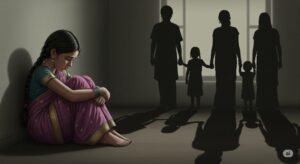
Psychological and Emotional Ramifications of a Mother’s Loss in India

The grief of a motherless daughter in India is a profound and life-altering event that marks a violent transition from childhood to a premature, unsupported adulthood. For a girl, the loss of her mother is not just a private tragedy but a seismic shockwave that destabilizes her entire world. The immediate aftermath brings a rush of severe grief symptoms, including shock, anger, fear, confusion, and a deep sense of guilt. As one woman from a small town in Maharashtra shared, “I cry for someone I never knew—into the void,” capturing the hollow ache of grieving a mother whose face she cannot remember. This profound personal trauma is made worse by a society that often refuses to acknowledge its depth, leading to what is known as disenfranchised grief.
The Unseen Wound of a Motherless Daughter
Initial Shockwave
Immediate grief symptoms include shock, anger, fear, and guilt, marking a violent transition to a premature adulthood.
Disenfranchised Grief
Societal norms often suppress a girl’s grief, deeming it secondary. This is known as “disenfranchised grief.”
Long-Term Risks
Internalized grief elevates the risk of clinical depression, anxiety disorders, and PTSD later in life.
The Unseen Wound of Disenfranchised Grief
In many parts of India, a daughter’s sorrow is treated as a secondary concern. After a mother’s passing, the focus quickly shifts to the family’s practical needs or the more socially recognized grief of the father. This societal silencing creates a painful condition known as disenfranchised grief—a sorrow that is not openly acknowledged, socially validated, or publicly mourned. The girl’s legitimate pain is invalidated, teaching her that her feelings are a burden. For example, a young girl in a joint family in Uttar Pradesh might be told to “be strong for her father” or to “help with her younger siblings,” effectively denying her the space to process her own trauma. This forces her to internalize her bereavement, a path that often leads to long-term psychological distress. This isn’t resilience; it is the suppression of a fundamental human need to grieve. This phenomenon is particularly acute in rural settings where community expectations enforce a stoic public facade, leaving girls to weep only in private.
The grief of a child is a secret they are often forced to keep. The world demands they grow up, but the wound remains, shaping the adult they become.
The Psychological Ramifications of Loss: A Lifelong Shadow
When childhood grief is unaddressed, it festers, significantly increasing the risk of severe mental health challenges in adulthood. The initial trauma evolves into something more chronic. Research consistently links early maternal loss to a higher likelihood of developing clinical depression, persistent anxiety disorders, and even Post-Traumatic Stress Disorder (PTSD). A recent pilot program in West Bengal, aimed at providing mental health support in schools, found that a disproportionate number of adolescent girls reporting severe anxiety had experienced the loss of their mother before the age of ten. Their symptoms were often dismissed by their families as “being too sensitive” or “seeking attention.” This dismissal is a critical failure, as it ignores the deep-seated impact of childhood trauma. The emotional wound left by the loss of a mother can manifest in various ways, including difficulty forming secure attachments, a constant feeling of insecurity, and a diminished sense of self-worth that can last a lifetime. The psychological ramifications of loss are not temporary; they are foundational.
2x Higher Risk
Research from the University of Pittsburgh reveals that children who lose a parent are more than twice as likely to show impairments in functioning at school and at home, even seven years later.
The Silent Scream: Navigating Trauma in Isolation
The motherless girl is thus left to navigate the most formative trauma of her life in a state of profound and enforced isolation. Her silent scream is unheard in a world that refuses to acknowledge her right to grieve. In India, where mental health services are scarce—with only 0.3 psychiatrists per 100,000 people—there is often no formal support system to turn to. A study in Assam found that 18.5% of orphan children aged 10-19 had emotional and behavioral distress. This enforced silence and lack of support create a perfect storm for long-term mental health problems. The girl is not just grieving; she is grieving alone, a reality that makes the clinical fallout of maternal loss even more severe.
The absence of a mother leaves a void that shapes a girl’s identity forever.
The Path to Healing: Acknowledgment and Support
The path to healing the grief of a motherless daughter begins not with forgetting, but with acknowledgment. Advocacy for accessible grief counseling through NGOs like Children First India is critical. By creating safe spaces for girls to voice their pain, share their memories, and connect with others who understand, we can begin to address the profound psychological ramifications of loss. It is a way to ensure that their unseen wound is finally seen, validated, and given the space it needs to heal. This is not just a compassionate act; it is a vital step in transforming lives and breaking the cycle of silent suffering.
5%
of children
In lower socioeconomic groups in India, 5% of children lose a parent by the age of 15, placing a huge number of children at risk for the severe clinical fallout of this profound loss without adequate support.
The initial shockwave of a mother’s death sends ripples throughout a daughter’s life, creating a deep and often silent grief. The psychological and emotional ramifications—from disenfranchised grief to a heightened risk of depression and PTSD—are severe and long-lasting. By understanding the depth of this wound and working to provide the necessary support systems, we can help these girls move from a state of enforced silence to one of healing and hope.