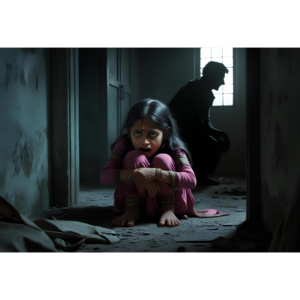

Community Rejection of Motherless Girls and Their Cruel Fate
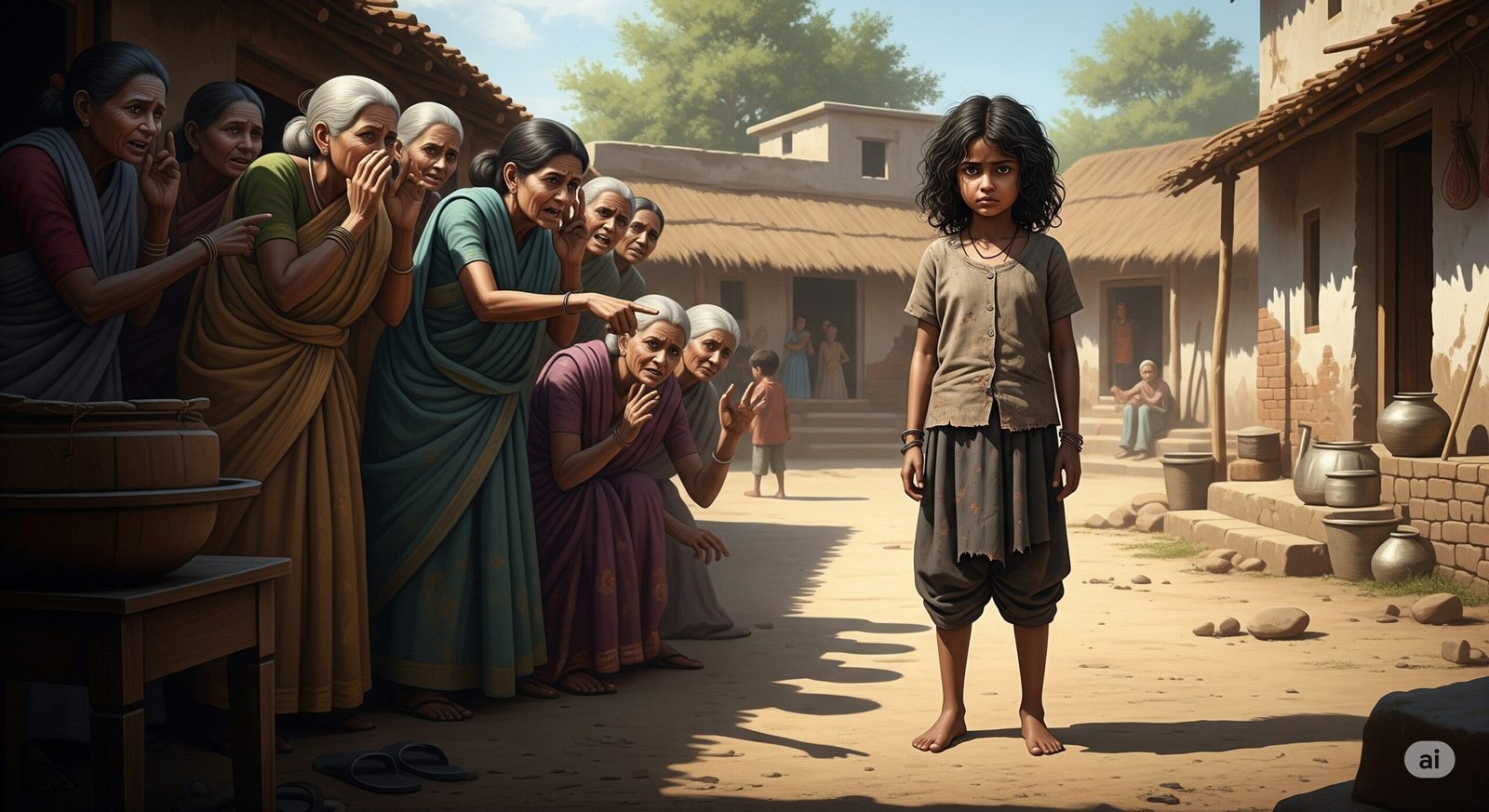
The community rejection of motherless girls is a cruel extension of their private grief, transforming their loss into a public spectacle of stigma and suspicion. In the most extreme manifestations of domestic violence, a father’s rage does not stop with his wife but extends to his children in the horrific act of familicide in India. This ultimate act of patriarchal violence is often rooted in a twisted sense of honour and control, where a man may destroy his family to exact revenge or erase the symbols of a life he feels has failed. The fate of the daughter is sealed not just by the violence within her home, but by a community and a justice system that often fail to protect her, viewing her through a lens of deep-seated gender bias.
A Daughter’s Fate
Community Rejection
Girls are often labeled as daughters of a “criminal,” intensifying their isolation and making them outcasts in their own communities.
Gendered Justice
The legal system may show leniency to a mother who kills, citing mental distress, while a father’s violence is seen differently.
The Ultimate Betrayal
Familicide, often rooted in patriarchal rage and a sense of “honour,” is the final, horrific outcome of unchecked domestic violence.
The Roots of Familicide and Community Rejection of Motherless Girls
The motivations for familicide are often deeply rooted in patriarchal pathologies. The “self-righteous” killer may murder his family to exact the ultimate revenge on his wife, blaming her for his actions, while the “anomic” killer may destroy his family when his economic or social status collapses, viewing them as symbols of a life he has lost. In South Asia, these killings are frequently linked to perceived violations of family “honour,” with daughters being the most likely victims. This aligns with India’s tragic history of female infanticide and feticide, where daughters are culturally devalued and seen as disposable burdens. The community rejection of motherless girls can intensify this dynamic, as a girl without a maternal protector is seen as having less value and being more expendable.
The village shunned me.
A Gendered System of Justice
A stark and revealing contrast emerges when examining how the Indian justice system treats mothers who kill their children versus fathers who do. This system of gendered justice often fails the motherless daughter. In a recent case, the Supreme Court showed remarkable leniency towards a mother who killed her two young daughters. Her murder conviction was reduced to culpable homicide, with the court citing the possibility of a temporary mental disorder and acknowledging her claim of acting under the influence of “invisible powers”. The verdict recognized that in rural settings, where superstition is rife, mental illness is often misinterpreted as supernatural possession. However, this nuanced understanding of mental health and cultural context appears to be starkly gendered. When a father kills his wife or daughter, the act is rarely viewed through a lens of mental pathology. Instead, it is often framed within a patriarchal logic of honour, revenge, or control—a violent but rational (in its own twisted way) assertion of authority. The system’s willingness to pathologize a woman’s violence while rationalizing a man’s leaves the daughter of a uxoricide victim with little hope.
91% Non-Governmental
With 91% of orphanages in India being non-governmental, the state’s capacity to protect children from community rejection and stigma is severely limited, highlighting the need for community-led interventions.
The Stigma That Seals a Daughter’s Fate
The orphan stigma is a powerful force in many Indian communities. A girl who is the daughter of a “criminal” father and a deceased mother is often seen as tainted by association. This community rejection can lead to her being ostracized, bullied, and denied opportunities. In the worst cases, this social death can precede a physical one. The lack of community support and protection makes her an easy target for further violence or exploitation. The fate of the daughter is thus determined not only by the actions of her father but by the inaction and judgment of her community. This is a profound societal failure, where the collective has abdicated its responsibility to protect its most vulnerable members.
When a father kills his wife or daughter, the act is rarely viewed through a lens of mental pathology.
The Need for Community-Level Intervention
To change the fate of these daughters, the intervention must happen at the community level. NGOs like Aarti For Girls work to provide solace and challenge the stigma that leads to community rejection. Public awareness campaigns are needed to shift cultural narratives away from victim-blaming and towards a focus on child protection. Communities must be educated to see the motherless girl not as a source of shame or misfortune, but as a child in desperate need of their collective care and protection. It is only by challenging the deep-seated patriarchal norms that enable both familicide and community rejection that we can hope to create a society where a daughter’s life is valued as much as a son’s, and where her fate is determined by her potential, not by her father’s crimes.
3,000
Girls Rescued
The trafficking of vulnerable girls is a major issue, with organizations like Homes of Hope rescuing thousands. Community rejection makes motherless girls prime targets for such exploitation.
The community rejection of a motherless girl, particularly in the aftermath of uxoricide, is a profound societal failure. It is a testament to the power of patriarchal norms and a gendered justice system that devalues female lives. To protect these daughters, we must not only reform our laws but also transform our communities, creating a culture of compassion and collective responsibility that refuses to accept any child’s suffering as her “fate.”