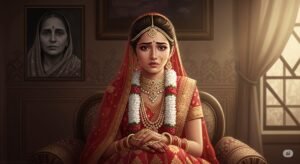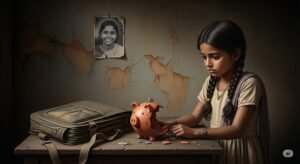
The Stigma of Childlessness for the Motherless Daughter
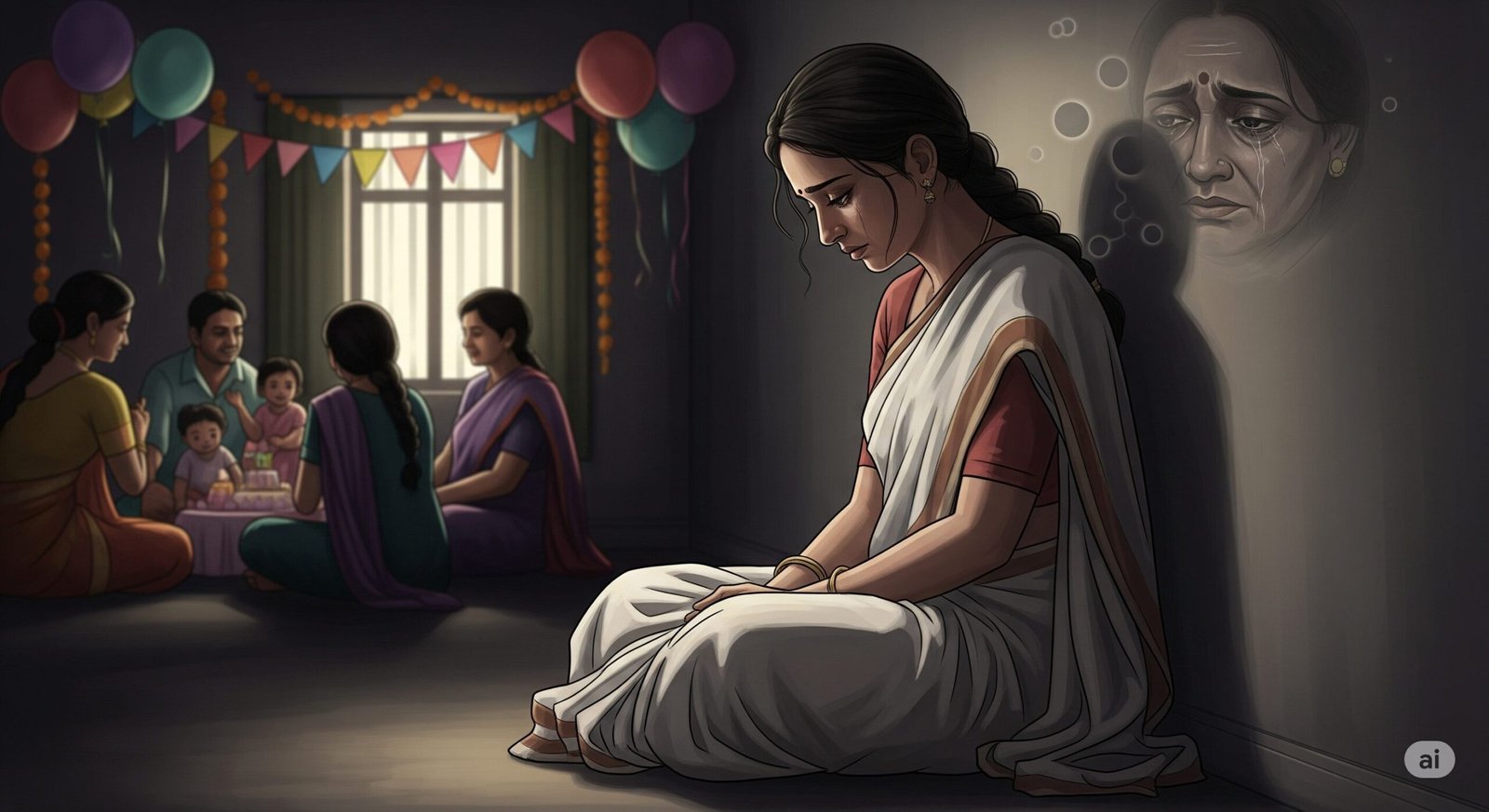
In the pronatalist culture of India, womanhood and motherhood are often seen as the same thing. A woman’s value in her family and society is deeply connected to her ability to have children, especially sons. For a woman who struggles with infertility or chooses not to have children, the social consequences can be severe. The stigma of childlessness can range from being subtly excluded to being openly shamed. She is often seen as incomplete or even unlucky. This stigma is made much worse for a motherless woman. Her childlessness is seen not just as a personal tragedy but as proof of her lack of worth, making her the unwanted daughter.
The Unwanted Daughter’s Burden
Stigma of Childlessness
In India’s pronatalist culture, a woman’s worth is tied to motherhood. Childlessness leads to severe social stigma and exclusion.
Motherless and Childless
For a motherless woman, childlessness is a double blow, reinforcing feelings of worthlessness and deepening her isolation.
Lack of Support
She lacks the one person—her mother—who could defend her against societal pressure and validate her worth beyond her ability to have children.
A Compounded Marginalization: Motherless and Childless
The experience of a woman who is both motherless and childless is one of compounded marginalization. Society may see her as failing in her main duty as a woman. She may be left out of religious ceremonies and family events that are focused on children, which deepens her feeling of isolation. Family members and neighbors may make insensitive comments or pity her, which further hurts her self-esteem. Research shows that infertile women often feel humiliated, guilty, anxious, and depressed, and may face problems in their marriage, including abuse. For a motherless woman, these psychological burdens are much heavier because she lacks the emotional support of a mother who could have confirmed her worth beyond her ability to have children. This is the heavy weight of the stigma of childlessness.
Are You a Real Woman?
The “Unwanted Daughter” and the Cycle of Lack
This painful reality is often shown in literature, where motherless characters are also childless, their inability to have children reflecting a deeper emotional emptiness. They are trapped in a cycle of lack—the lack of a mother, and the lack of a child—which society sees as a basic failure of their womanhood. She becomes the unwanted daughter, a figure defined by what she is missing rather than what she is. This narrative is not just fiction; it is the lived experience of many women. The stigma of childlessness becomes the final, cruel proof of the social orphanhood that started the day she lost her mother, reinforcing the idea that she is somehow incomplete or flawed.
Pronatalist Culture
In India’s strongly pronatalist culture, a woman’s value is deeply tied to her ability to have children, making the stigma of childlessness particularly severe and damaging to her mental health.
The Absence of a Key Defender
In the face of such intense societal pressure, a woman’s mother is her most important defender. She is the one who would stand up for her daughter, protect her from insensitive comments, and remind her of her inherent worth, regardless of whether she has children. A motherless woman faces this battle alone. She has no one to shield her from the judgment and pity of others. This lack of a maternal advocate makes her more vulnerable to internalizing the shaming messages of her community, leading to a deeper crisis of self-esteem. The absence of her mother means the loss of her most powerful ally in a culture that can be unforgiving to women who do not meet its traditional expectations.
She is trapped in a cycle of lack—the lack of a mother, the lack of a child.
The Need for New Support Systems
To counter the stigma of childlessness for motherless women, new support systems are needed. NGOs and community groups can play a vital role in creating safe spaces where these women can share their experiences without judgment. Public awareness campaigns are needed to challenge the idea that a woman’s worth is defined by her ability to have children. By promoting a more inclusive understanding of womanhood, we can reduce the immense pressure placed on childless women. With only a fraction of India’s 30 million orphans receiving institutional care, community-based support is essential. Organizations like Seruds, which provide care for destitute children and elders, highlight the need for a broader support network. For motherless women, this support must also include a validation of their worth as individuals, separate from their roles as potential mothers.
Only 370,000
in care
Of the 30 million orphans in India, only 370,000 are in institutional care, leaving the vast majority to face societal stigmas, like the stigma of childlessness, without any formal support.
The stigma of childlessness is a heavy burden for any woman in India to bear, but for a motherless daughter, it is a crushing weight. It is the final, painful link in a chain of loss and neglect. By creating a more compassionate and inclusive society, one that values women for who they are and not just for the roles they fill, we can begin to ease this burden and offer these “unwanted daughters” the acceptance and validation they deserve.