
The Legal Void for Social Orphans: An Unseen Crisis in India
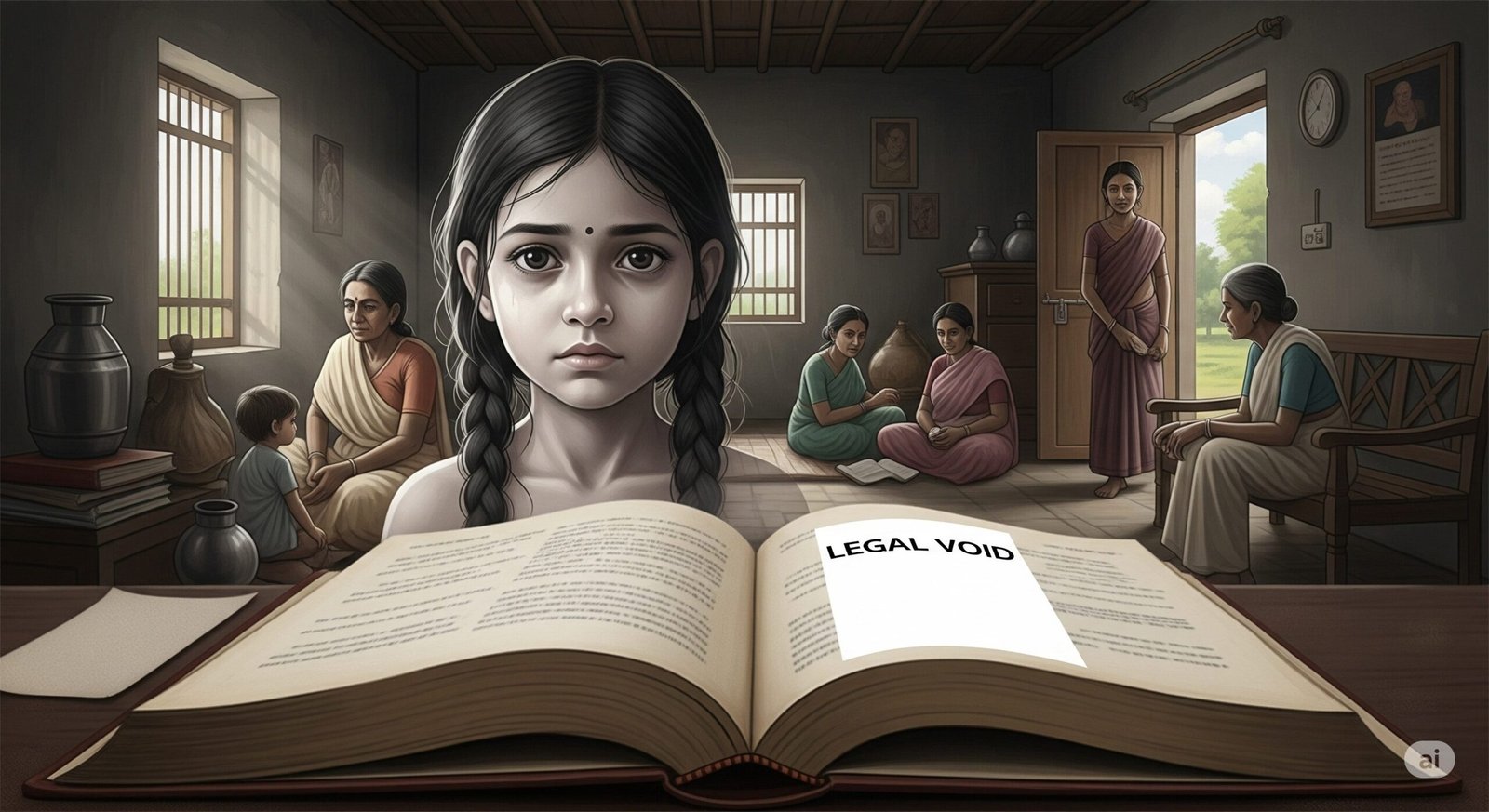
While Indian law has frameworks to protect children, there is a significant and dangerous legal void for social orphans. A “social orphan” is a child who has at least one living parent but is not receiving adequate care, often living with relatives in informal kinship arrangements. This is the reality for millions of motherless girls in India. Because they are not technically “orphans” in the eyes of the law and are living within a family structure, they become invisible to the very systems designed to protect them. This gap in child protection laws India means that the neglect and abuse they may suffer in kinship care often goes completely unchecked, creating a crisis hidden in plain sight.
Falling Through the Cracks
The “Social Orphan”
A child with a living parent but without proper care, often living with relatives. They are not legally recognized as orphans.
The Legal Void
Child protection laws focus on institutional care, leaving no mechanism to monitor the well-being of children in informal kinship care.
The Invisible Child
Without legal recognition of their situation, these girls become invisible to the state, with no formal system to protect them from neglect or abuse.
Kinship Care Legal Issues: A System Built on Assumptions
The Indian legal system, including the Juvenile Justice Act, prioritizes family-based care over institutionalization, which is a positive goal. However, the system is built on the assumption that care within the extended family is always safe and nurturing. This creates serious kinship care legal issues. There is no formal mechanism for the state to monitor the well-being of a child placed in an informal kinship arrangement. Unlike a formal adoption or foster care placement, where there are background checks and regular follow-ups, a girl living with her aunt or grandparents after her mother’s death is completely off the radar of child protection services. This leaves her vulnerable to neglect, abuse, and exploitation with no legal oversight.
The law doesn’t see me.
The Invisible Child Syndrome: Lost to the System
The result of this legal void is the invisible child syndrome. Because she is not in an orphanage, she is not counted in the statistics of children in need of care. Because she has a living father, even if he is absent or abusive, she is not legally an orphan. She exists in a grey area where no one is formally responsible for her well-being. This invisibility is dangerous. It means that if she is being overworked, underfed, or emotionally abused by her relatives, there is no system in place to intervene. Her suffering is a private matter, hidden behind the closed doors of a family home. The very system that is supposed to protect children ends up making her invisible.
Only 370,000 in Institutions
Of the 30 million orphaned children in India, only 370,000 are in institutional care, meaning the vast majority are in informal kinship arrangements with no legal oversight, creating a massive legal void.
The Need for a Redefined Child Protection Policy
Addressing the legal void for social orphans requires a fundamental rethinking of India’s child protection policy. The law must expand its definition of a “child in need of care” to include those in informal kinship arrangements who are at risk of neglect or abuse. There needs to be a mechanism for registering and monitoring these placements, not to interfere with families, but to provide a safety net. This could involve regular check-ins from social workers or community health workers (ASHAs) who are trained to spot the signs of distress. The goal should be to support kinship caregivers while also holding them accountable for the child’s well-being.
A child living with relatives is often invisible to the system.
Empowering the Community to Fill the Void
Given the scale of the problem and the limitations of the state, community-based solutions are essential. Communities need to be empowered to act as the eyes and ears of the child protection system. This means creating awareness about the risks of neglect in kinship care and establishing clear and simple ways for community members to report concerns without fear of reprisal. By fostering a sense of collective responsibility for all children, we can begin to fill the legal void that leaves so many motherless girls at risk.
89%
Live with a Single Parent
In India, 89% of children in single-parent households live with a surviving parent, but this statistic hides the reality that many are still sent to live with relatives, falling into the legal void for social orphans.
The legal void for “social orphans” is a critical failure in India’s child protection framework. It is a blind spot that allows the suffering of millions of motherless girls to go unnoticed and unaddressed. By reforming our laws to recognize the unique vulnerabilities of children in kinship care and by empowering communities to act as a safety net, we can ensure that no child is made invisible by the very system that is meant to protect her.