
Property Disputes & the Motherless
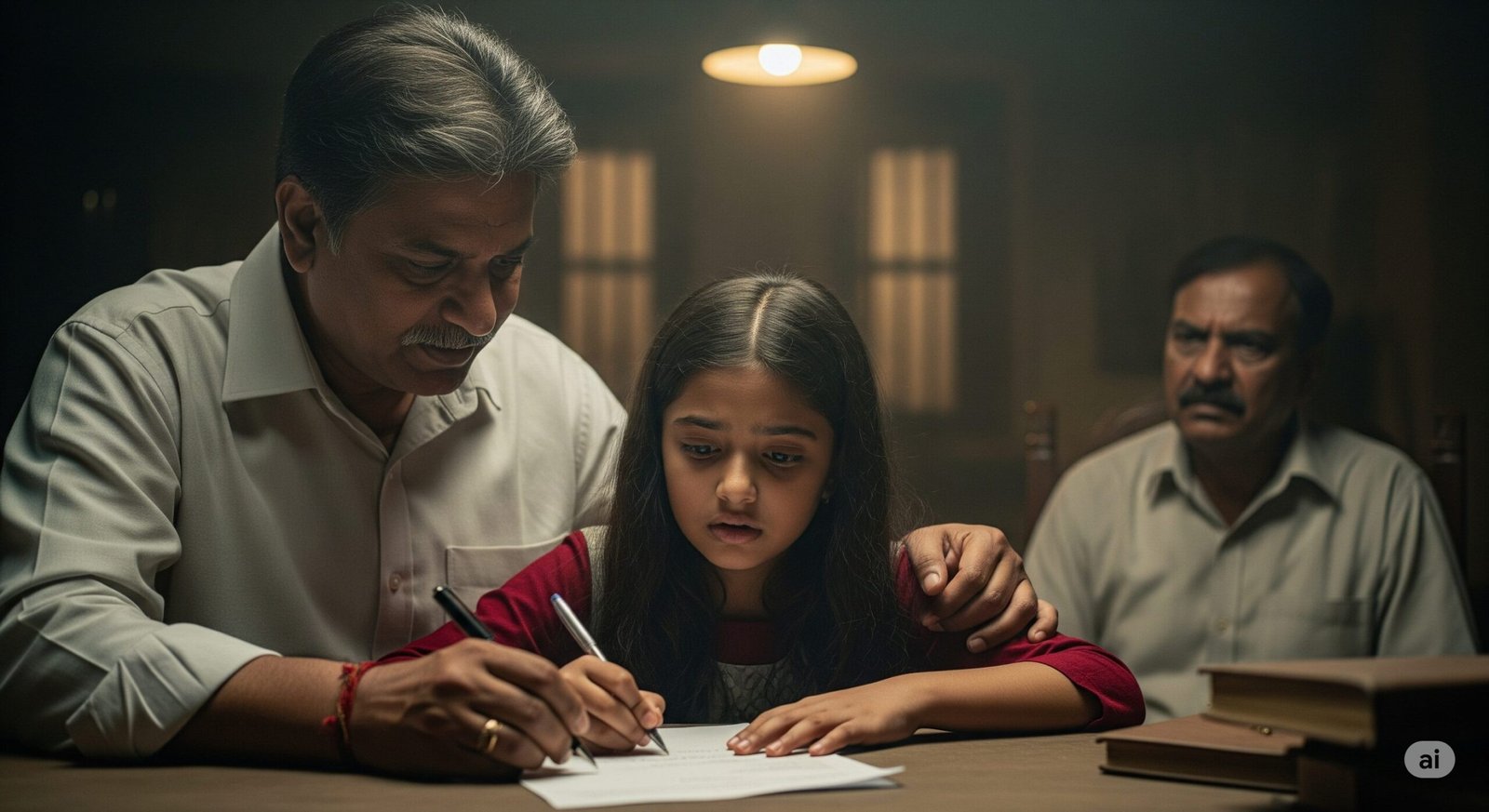
For a motherless daughter in India, the trauma of her loss is often followed by a second, calculated betrayal: the theft of her inheritance. The intense property disputes motherless daughters face are a stark illustration of how their vulnerability is exploited by those who should protect them. Without a mother to act as her advocate, a girl becomes an easy target for greedy relatives who use a variety of cruel tactics, including fabricated adoptions and other legal loopholes in property law, to dispossess her. This is not just a financial crime; it is an act of profound emotional violence that reinforces her isolation and worthlessness.
The Theft of a Future
Fabricated Adoptions
A common tactic where a male relative falsely claims to have adopted the girl to illegally gain control of her inheritance.
Coerced Signatures
Girls are often tricked or forced into signing away their property rights on documents they do not understand.
Daughter’s Dispossession
Without her mother’s protection, a girl’s legal inheritance rights are often ignored, leading to her complete financial dispossession.
Fabricated Adoptions: A Cruel Deception
One of the most insidious tactics used in these property disputes motherless daughters face is the use of fabricated adoptions. A male relative, often an uncle, may create false documents to “prove” that he legally adopted the girl. This is a strategic move to establish himself as her legal guardian, thereby giving him control over any property she is due to inherit from her mother or father. The girl, often a minor and unaware of her rights, is in no position to challenge this. This fraudulent act is a profound betrayal, using the concept of family to commit a crime against its most vulnerable member. It is a clear exploitation of the legal loopholes in property law that fail to protect a child in such a situation.
They made me sign papers I didn’t understand.
Coercion and the Daughter’s Dispossession
Beyond outright fraud, coercion and manipulation are common tools for achieving the daughter’s dispossession. A girl may be pressured to sign a relinquishment deed, a document that legally transfers her property rights to someone else. This is often done under the guise of protecting “family harmony” or with promises of future care that never materialize. She may be told that signing the papers is a formality for her marriage or education, only to discover later that she has been tricked into giving up her inheritance. Without a mother to question these actions and protect her interests, she is easily overpowered by the authority of her male relatives. This is a quiet but devastating form of abuse that leaves her economically powerless.
Only 13% of Land
Despite legal reforms, women in India own only 13% of the farmland, a statistic that reflects the deep-seated cultural barriers that lead to a daughter’s dispossession, especially after losing her mother.
The Legal System’s Blind Spot
The legal system often fails to protect girls from these predatory practices. The burden of proof in property disputes is high, and a girl who has been dispossessed may lack the resources and knowledge to challenge her relatives in court. Furthermore, the system is not designed to recognize the unique vulnerability of a motherless daughter. There is often no automatic review of property transfers involving orphaned minors, leaving them to fend for themselves. This legal blind spot allows for the widespread exploitation of these girls, turning a legal right into an empty promise.
Without her mother, a girl is an easy victim of such fraud.
The Need for Proactive Legal Protection
To prevent the dispossession of motherless daughters, we need a more proactive legal approach. This includes mandatory legal oversight of any property transfers involving an orphaned minor. It also means increasing access to free legal aid for girls who need to challenge fraudulent claims. NGOs can play a crucial role in this by providing legal literacy and advocacy services. By closing the legal loopholes that allow for such exploitation and by creating a system that actively protects the rights of these vulnerable girls, we can ensure that their inheritance becomes a source of security, not a source of further trauma.
2005
Hindu Succession Act Amendment
The 2005 amendment gave daughters equal rights to ancestral property, but the reality of property disputes shows that the law alone is not enough to protect the most vulnerable.
Property disputes are a cruel and calculated form of abuse against motherless daughters, exploiting their grief and vulnerability for financial gain. The use of fabricated adoptions and other legal loopholes is a testament to the deep-seated patriarchal norms that seek to deny women their rights. By strengthening our legal systems and providing robust advocacy, we can fight to ensure that every daughter’s inheritance is protected, giving her the financial foundation she deserves for a secure future.