
Multi-Stakeholder Approach for Child Protection in India
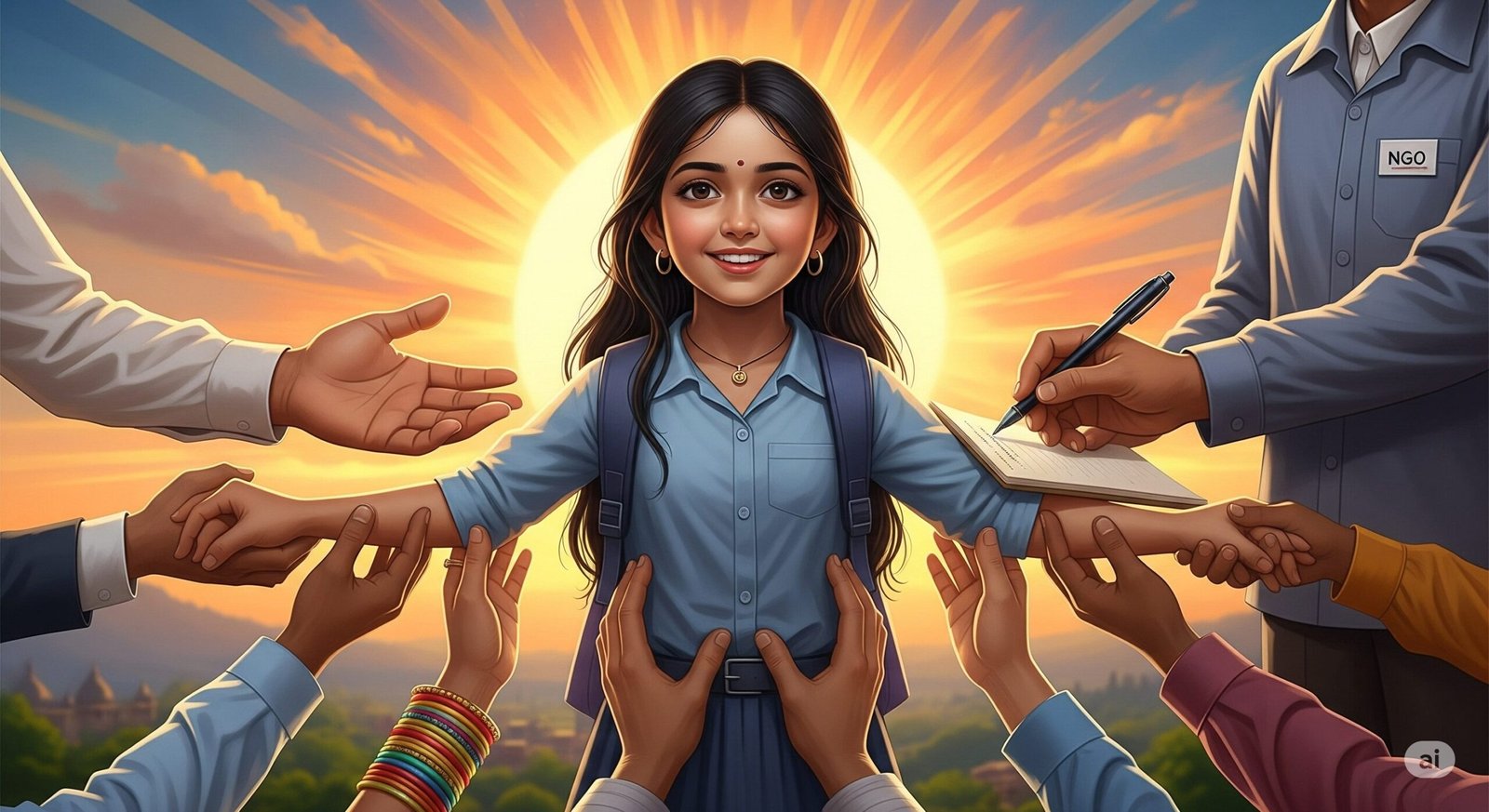
The complex web of challenges facing motherless daughters in India—from legal disinheritance and emotional neglect to physical vulnerability—cannot be untangled by any single entity. The path forward requires a unified, multi-stakeholder approach for child protection. This is a call to action for India to move beyond siloed efforts and embrace a model of collective responsibility. It is a recognition that the state, civil society, local communities, and individuals all have a vital role to play in creating a society where the loss of a mother does not mean the loss of a future. The ultimate goal is to move beyond simply addressing the problems to actively shifting the narrative from one of tragedy to one of empowerment.
A Collective Responsibility
The Role of the State
To enact and enforce protective laws, reform guardianship and inheritance, and provide financial support to vulnerable families.
The Role of Civil Society
To provide on-the-ground support, advocate for policy change, and build national networks of care and mentorship.
The Role of the Community
To reject stigma, act as local watchdogs for child safety, and create an environment of compassion and support.
A Call to Action for India: A Unified Framework
This is a call to action for India to create a unified framework that brings together all stakeholders. The government must take the lead by enacting the necessary legal reforms, particularly in guardianship and inheritance laws, and by providing the funding to strengthen child protection services at the local level. This includes empowering Child Welfare Committees and ensuring that financial support schemes are adapted to meet the specific needs of motherless girls in kinship care.
The safety and well-being of a child is everyone’s business.
The Indispensable Role of NGOs and Civil Society
NGOs and civil society organizations are the essential bridge between policy and people. They must continue to provide direct services—shelter, counseling, legal aid—while also scaling up their advocacy efforts. Building a national network of these organizations is crucial for sharing resources, coordinating efforts, and presenting a powerful, unified voice to the government. They are the engine of this multi-stakeholder approach, driving change from the grassroots up.
30 Million Orphans
The sheer scale of the orphan crisis in India, with 30 million children affected, makes a coordinated, multi-stakeholder approach not just a good idea, but a moral imperative.
Shifting the Narrative: The Responsibility of Media and Community
Lasting change requires a shift in the cultural mindset, a task that falls to the media and the community. The media has a responsibility to move beyond stereotypical portrayals of motherless girls as tragic victims and instead highlight stories of resilience and strength. This work of shifting the narrative is crucial. At the same time, communities must embrace their role as protectors. This means actively rejecting the stigma and fatalism that allow for neglect, and fostering a culture of collective responsibility where every neighbor, teacher, and community leader feels empowered to look out for a vulnerable child. This cultural transformation is the foundation upon which all other interventions are built.
We need to change the story from ‘bechari’ (helpless one) to ‘bahadur’ (brave one).
The Path Forward: A Promise to Every Daughter
The path forward is clear: a coordinated, compassionate, and comprehensive multi-stakeholder approach for child protection. It is a path that requires the government to lead with strong policies, NGOs to act as the bridge to the community, and every citizen to embrace their role as a guardian of the next generation. By working together, we can transform the landscape of loss into a landscape of hope, ensuring that every motherless daughter in India is not defined by the mother she lost, but by the future she can build.
A
Shared Responsibility
The protection of a motherless child is not the job of one person or entity, but the shared, collective responsibility of an entire society.
The plight of the motherless daughter is a mirror reflecting the deepest failures of our social and legal systems. But it can also be a catalyst for profound change. By embracing a multi-stakeholder approach, we can begin to mend the cracks in our safety net and build a future where every girl is safe, supported, and empowered to reach her full potential.