Malnutrition in Motherless Girls: Stunted Growth & Neglect
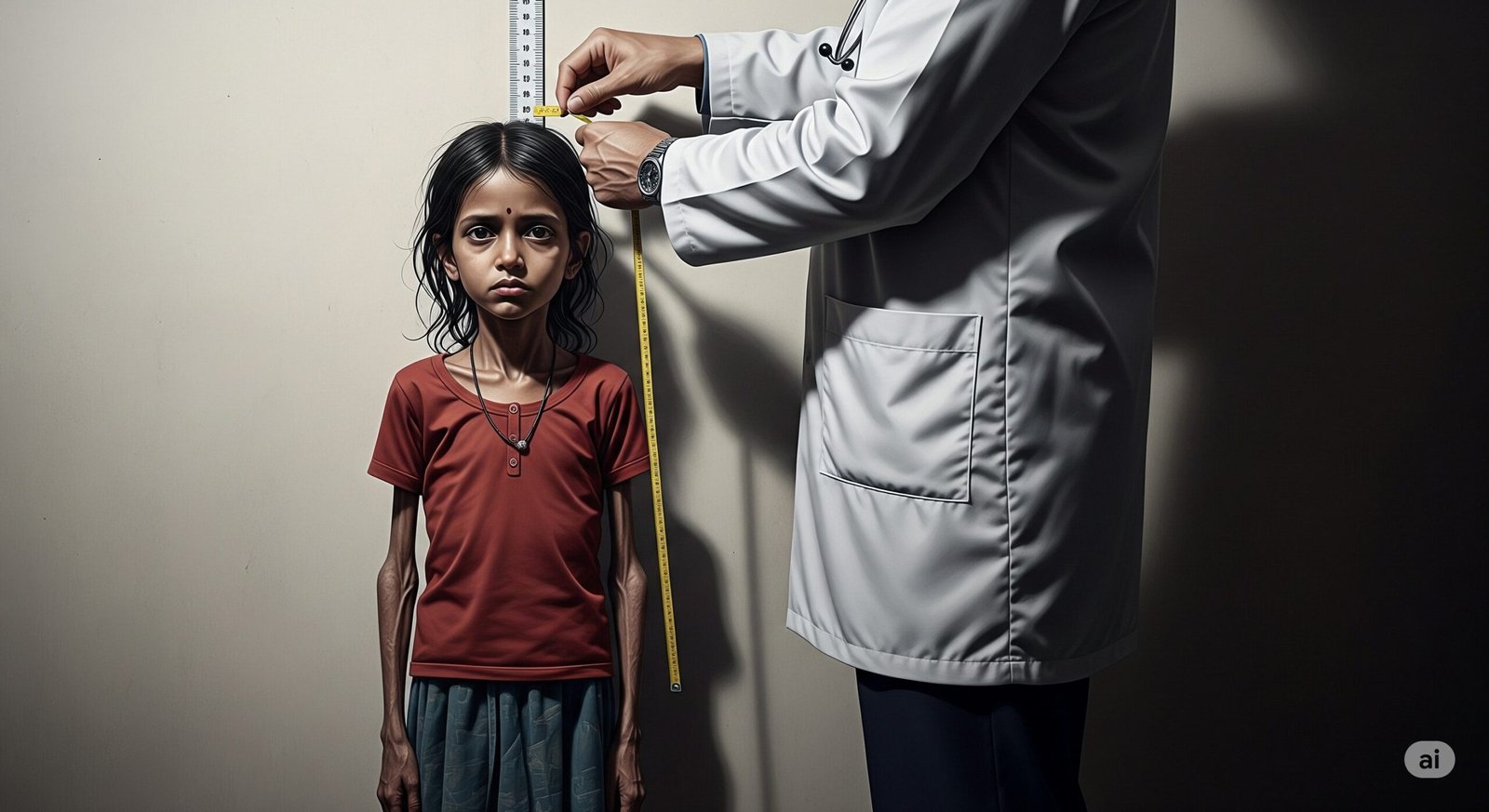
The physical development of a girl is deeply connected to the care she receives, a role mostly fulfilled by her mother in India. A mother’s death breaks this lifeline, leading to a high risk of malnutrition in motherless girls and its terrible consequences. UNICEF research shows the strong link between a mother’s nutrition and her child’s health, noting that poor nutrition in mothers continues a cycle of malnutrition for generations. When a mother dies, this cycle speeds up for her daughter. The family’s money problems often lead to not having enough food, and in a patriarchal home, the female child is usually the last to eat and gets the least nutritious food. This lack of food during important growth years can lead to serious and often permanent physical problems.
The Physical Scars of Neglect
Stunted Growth
Maternal orphans have a 1.3 times higher risk of stunting, a sign of chronic malnutrition that can have lifelong consequences.
Intergenerational Cycle
A mother’s poor health leads to a child’s poor health, creating an intergenerational cycle of poor health that is made worse by her death.
The Scars of Neglect
Stunted growth is a visible sign of neglect, a physical scar that affects a girl’s education, future potential, and overall quality of life.
Stunted Growth in Children: A Visible Sign of a Deeper Wound
Studies comparing children in orphanages—a stand-in for children without primary parental care—with those living with their families show clear differences in physical development. One study found that undernutrition was as high as 54.8% among children in orphanages, with 23.4% having stunted growth in children (a low height for their age that shows chronic malnutrition). Another multi-country study found that maternal orphans had a 1.3 times higher risk of stunting compared to children with two living parents. For a motherless girl, this is not just a health issue; it is a life sentence. Stunting is not just about being short; it is a sign of long-term nutritional lack that is linked to slower mental development, less productivity as an adult, and a higher risk of illness and death. The scars of neglect are not just emotional; they are carved into her very body.
We often went hungry.
The Intergenerational Cycle of Poor Health
A mother’s absence creates an intergenerational cycle of poor health. A girl who grows up with stunted growth from malnutrition, a weak immune system from constant stress, and poor knowledge of reproductive health because of the loss of maternal guidance is on a path to poor health in her own adulthood. These problems are carried with her into marriage and motherhood, where they are often passed on to her own children. UNICEF research shows this cycle clearly. It suggests that nearly 50% of growth failure in children by age two can be linked to the poor nutrition and health of the mother during her own life. A motherless girl who becomes pregnant while malnourished is at a much higher risk of having an undernourished, low-birth-weight child. This child then starts life with a disadvantage, with a higher risk of stunting, illness, and developmental delays, thus continuing the cycle.
52.59% Malnourished
According to the 2019-21 National Family Health Survey (NFHS-5), over half of Indian children under 5 are affected by at least one form of malnutrition, a crisis that is worsened by maternal loss.
The Lack of Learned Health Knowledge
This cycle is made worse by the lack of learned health knowledge. A mother is the main health teacher in the family, teaching her daughter about nutrition, hygiene, and when to get medical care. A motherless woman often does not have this basic knowledge, for herself or for her children. She may not recognize warning signs during pregnancy or in her newborn, leading to delays in getting care that can have deadly consequences. The story of Bina Bai, a child bride who lost her first baby and whose second child was born unhealthy, is a clear example of how the health risks of early pregnancy are made much worse when maternal guidance is missing.
Maternal orphans were found to have an increased risk of stunting (RR 1.3, 95% CI 1.2 to 1.4) compared to children with two living parents.
Breaking the Cycle of Neglect and Malnutrition
To break this devastating cycle, interventions must focus on the nutritional and health needs of motherless girls. This includes ensuring that kinship care placements are monitored for signs of nutritional neglect. It also means providing targeted support through community health workers (ASHAs) and school-based health programs. These programs can offer nutritional supplements, health check-ups, and education on hygiene and reproductive health. By addressing the physical scars of neglect, we can not only improve the health of the motherless girl but also ensure that the cycle of poor health does not continue to the next generation. The physical well-being of these girls is a direct reflection of our society’s commitment to their care.
17%
of children under six
According to the Ministry of Women and Child Development (2024), 17% of children under six are underweight, a statistic that is likely much higher for motherless girls who face neglect.
The malnutrition in motherless girls is a stark and measurable sign of their neglect. It is a physical scar that carries lifelong consequences for their health, their education, and their future children. By recognizing the deep connection between a mother’s presence and a child’s physical well-being, we can create support systems that address these critical needs and break the intergenerational cycle of poor health.