
Familial Complicity in Uxoricide: A Daughter’s Betrayal
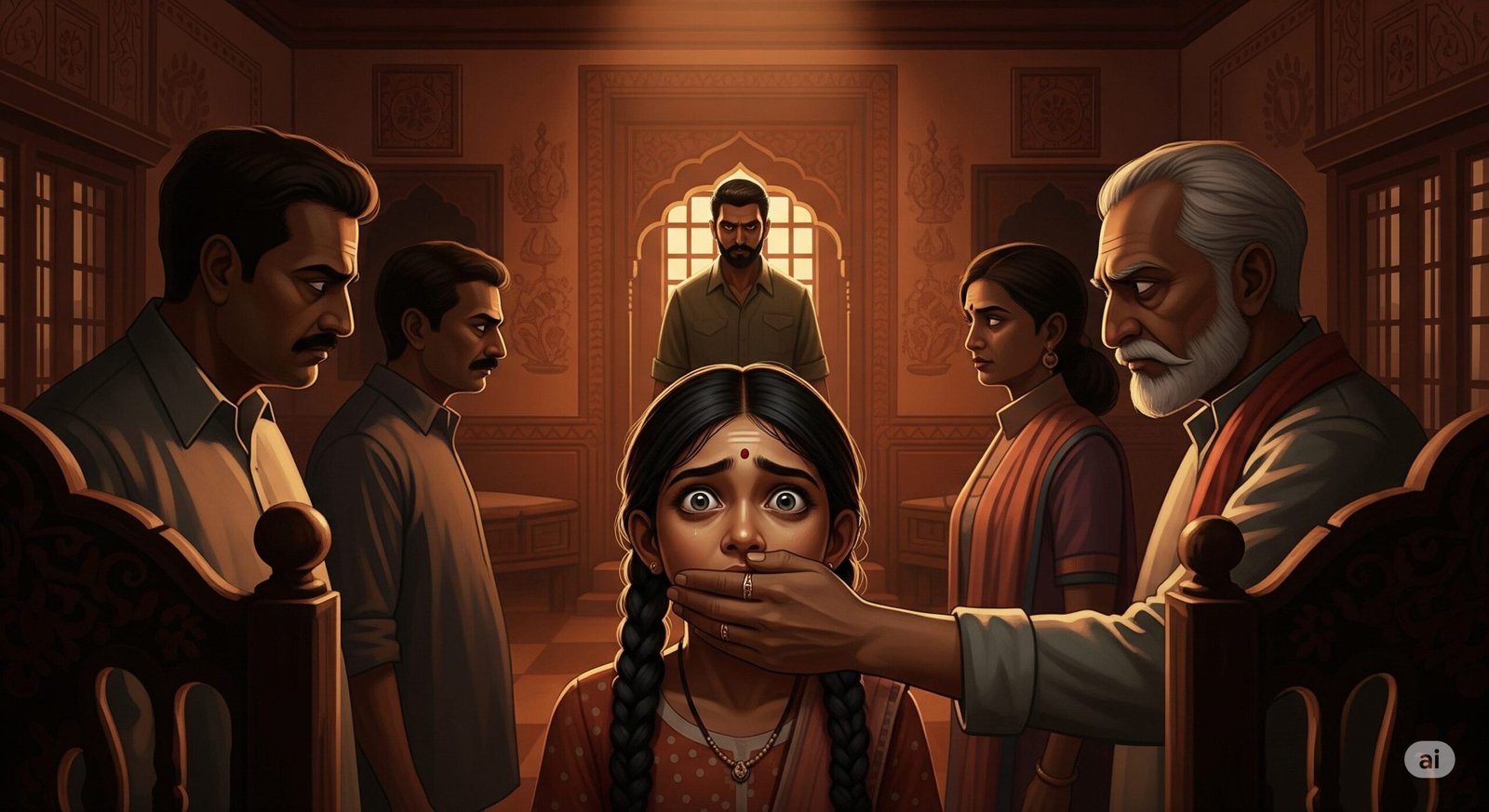
The familial complicity in uxoricide represents a second, and often more psychologically damaging, betrayal for a daughter who has witnessed her mother’s murder. In the aftermath of the crime, the paternal family in a deeply patriarchal family structure often closes ranks around the male perpetrator. The instinct is not to seek justice for the murdered woman or to protect her orphaned child, but to preserve the male lineage, protect family “honour,” and secure control over property. This leads to the construction of a formidable wall of silence and justification around the crime, trapping the daughter in a waking nightmare where her protectors have become her tormentors.
The Wall of Silence
Protecting the Perpetrator
The paternal family often closes ranks around the male perpetrator to preserve family “honour” and control property.
Victim-Blaming
A false narrative is often created that blames the murdered mother, accusing her of infidelity or disobedience to justify the crime.
Silencing the Child
The daughter’s own testimony is dismissed or suppressed, invalidating her grief and forcing her into a conspiracy of silence.
The Patriarchal Logic of Familial Complicity in Uxoricide
The family’s support for the perpetrator is often rooted in a cold, patriarchal logic. Sons are valued as permanent assets who carry on the family name, while daughters-in-law are frequently viewed as outsiders. This dynamic is reflected in India’s alarmingly low murder conviction rates, which stood at just 36.2% between 2005 and 2009. This systemic failure to secure justice is often enabled by the family itself. They may actively participate in a cover-up, hiding evidence or intimidating witnesses. A common and cruel tactic is to engage in posthumous victim-blaming in India. The murdered mother is accused of infidelity, disobedience, or failing in her duties as a wife, thereby framing her murder as a justified, if tragic, outcome. This patriarchal logic prioritizes the reputation and freedom of the son over the life of his wife and the well-being of his daughter. The family becomes an accessory after the fact, not just to the crime of murder, but to the ongoing psychological abuse of the surviving child.
My family chose him over me.
Trapped Behind the Wall of Silence
For the daughter, this conspiracy of silence is a form of psychological torture. Her own testimony of what she witnessed is dismissed or suppressed. Her grief is invalidated because, according to the family’s narrative, her mother was flawed and deserved her fate. She is forced to live under the care and control of her mother’s murderer and the very people who are enabling him. This is the horrifying reality of the wall of silence. The home, already the scene of the crime, becomes a place of continued psychological torment. She must navigate a world where her own family has betrayed her, where truth is punished, and where her survival depends on her complicity in the erasure of her own mother. This systemic complicity is a profound form of secondary abuse that inflicts deep, lasting damage on her sense of self-worth and her perception of the world.
63% Maternal Deaths
In India’s poorer states, where patriarchal norms are most entrenched, 63% of maternal deaths occur, creating a high-risk environment for familial complicity in cases of violence.
The Impact on a Daughter’s Psyche
The psychological impact of this betrayal cannot be overstated. The daughter is trapped in a state of cognitive dissonance, forced to reconcile her love for her father with the horrific reality of his actions. She may develop severe anxiety, depression, and a profound sense of learned helplessness. Her ability to trust is shattered, not just by the initial act of violence, but by the ongoing deception and emotional manipulation of her entire family. This experience can lead to a lifetime of relational difficulties, as she struggles to form secure attachments, constantly fearing betrayal and abandonment. The familial complicity in uxoricide ensures that the trauma is not a single event, but a chronic condition that defines her existence.
The family becomes an accessory after the fact, not just to the crime of murder, but to the ongoing psychological abuse of the surviving child.
The Need for External Intervention
Given the closed ranks of the family, intervention from outside is critical. Child protection services, law enforcement, and NGOs must be trained to recognize the signs of familial complicity and to prioritize the safety and well-being of the child witness above all else. This requires a shift in perspective, from viewing the family as a monolithic unit to understanding its complex and often dangerous internal dynamics. Organizations like the Invisible Girl Project work to challenge the cultural biases that devalue girls and enable violence against them. Without such external intervention, the daughter remains trapped behind the wall of silence, her trauma unacknowledged and her future uncertain.
90%
Drop in “Honour” Killings
While reported “honour” killings have dropped, these numbers may not capture the full extent of familial violence and complicity that occurs behind closed doors, hidden from official view.
The familial complicity in uxoricide is a profound betrayal that multiplies the trauma for a surviving daughter. It is a conspiracy of silence that prioritizes patriarchal honour over a child’s life and well-being. To protect these girls, society must be willing to break down this wall of silence, challenge the patriarchal family structure that enables it, and hold not just the perpetrator, but also his enablers, accountable.