
Creating a Safety Net for Motherless Girls in India
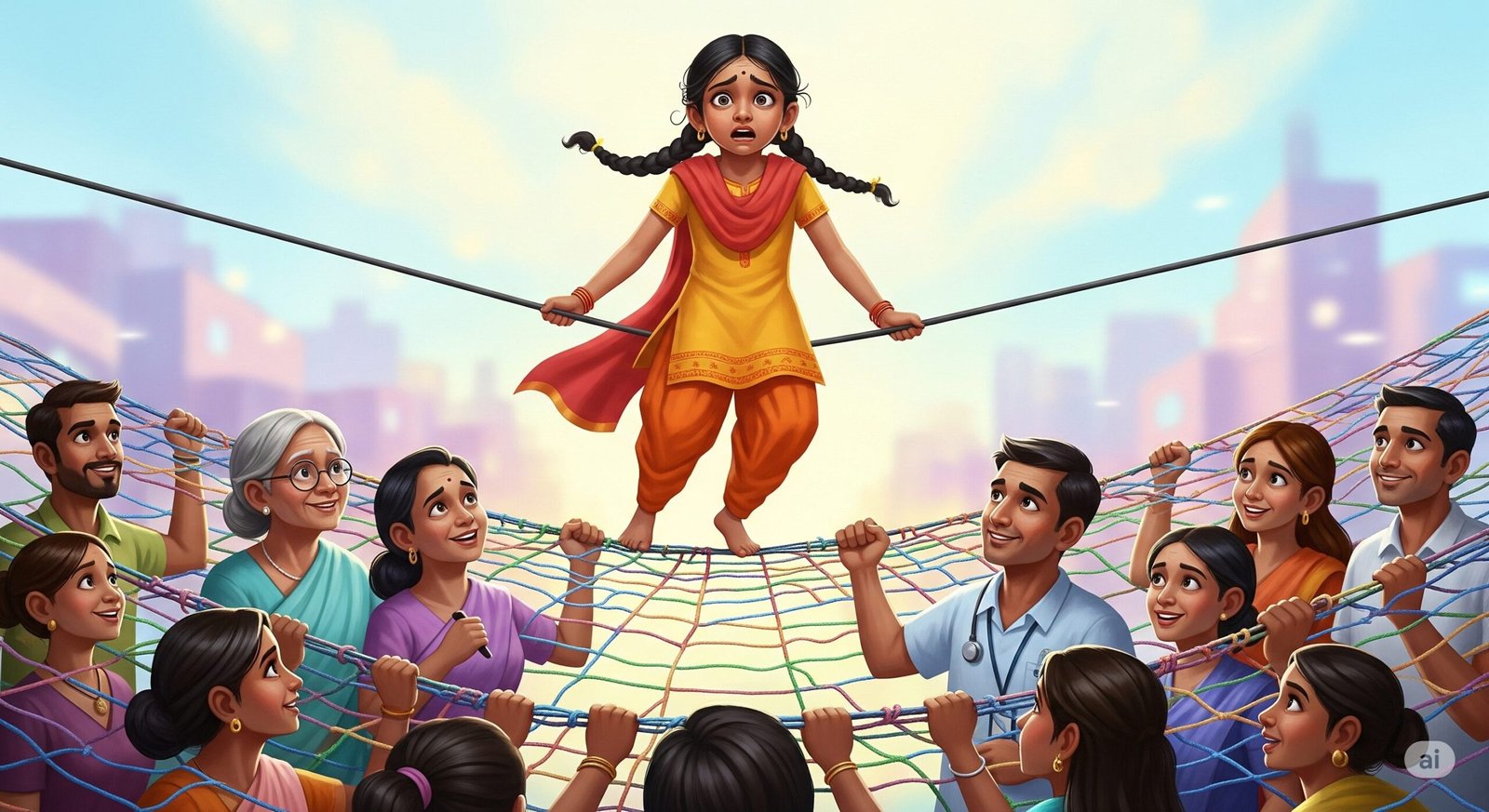
To truly protect the vulnerable daughters left behind after a mother’s death, passive policies are not enough. The only effective solution is creating a safety net for motherless girls that is proactive, legally binding, and woven into the fabric of the community. This requires a fundamental shift from hoping for support to mandating support. Current child protection policy India has significant gaps that allow these girls to fall through the cracks, especially when they are in informal kinship care. Closing these gaps means building robust community-based support systems and implementing laws that automatically trigger a protective response the moment a girl loses her mother.
Building a Circle of Care
Mandatory Registration
Legally requiring the registration of a motherless minor to ensure she is visible to child protection services and support systems.
Community Watchdogs
Empowering teachers, ASHA workers, and Anganwadi staff to act as official monitors of a motherless child’s well-being.
Financial Support
Providing direct financial aid to kinship caregivers to ensure the girl is seen as a valued family member, not a burden.
From Invisible to Registered: The First Step in Mandating Support
The first step in mandating support is to make the invisible visible. There must be a legal requirement for the registration of any minor child upon the death of their mother. This registration would automatically enter the child into a state-monitored protection program. It would ensure that the child does not simply disappear into an informal kinship arrangement where she can be easily neglected or abused. This simple administrative step is a powerful tool for accountability. It makes the state aware of the child’s vulnerable status and creates a formal record that can be used to track her well-being, ensure her inheritance rights are protected, and monitor her educational progress.
If the system does not see them, it cannot protect them.
Community-Based Support: The Eyes and Ears of the System
A truly effective child protection policy India cannot rely solely on government officials. It must empower the community to act as its eyes and ears. This means giving a formal, recognized role to the people who interact with the child regularly. Teachers, ASHA workers, and Anganwadi staff are perfectly positioned to monitor a motherless girl’s health, school attendance, and emotional state. By training them to recognize the signs of neglect and abuse and giving them a clear, protected channel for reporting their concerns, we can create a powerful, localized safety net. This model of community-based support turns passive observers into active protectors.
30 Million Orphans
With 30 million orphans in India and only 370,000 in institutional care, a state-run system alone cannot cope. Mandating community-based support is the only viable solution.
Financial Intervention: From Burden to Valued Member
One of the primary drivers of neglect in kinship care is the financial strain on the host family. To counter this, the state must provide direct financial support to relatives who take in a motherless child. This is not just a welfare payment; it is a strategic investment in the child’s well-being. By easing the economic burden, these payments can transform a girl’s status from a “mouth to feed” to a valued member of the family. This financial support should be tied to specific conditions, such as ensuring the girl remains in school and receives regular health check-ups. This approach addresses the root cause of much of the neglect and provides a powerful incentive for families to provide proper care.
The goal is to move from a system of hope to a system of guarantees.
A Call for a Coordinated National Strategy
Ultimately, creating a safety net for motherless girls requires a coordinated national strategy. It requires legal reform to make these girls visible to the system. It requires empowering local communities to take an active role in their protection. And it requires financial investment to support the families who care for them. This is not a matter of charity, but of justice. Every child has a right to a safe and healthy childhood. By mandating a system of support, we can ensure that the loss of a mother does not have to mean the loss of a future for her daughter.
Only 9%
of orphanages
Only 9% of orphanages in India receive government support, highlighting the critical need to invest in and formalize community-based kinship care as the primary safety net.
The current system leaves the fate of a motherless girl to chance—the chance of a kind relative, the chance of a watchful neighbor. This is not enough. We must move from a system of hope to a system of guarantees. By mandating support and creating a robust, multi-layered safety net, we can fulfill our collective responsibility to protect our most vulnerable children and ensure that no girl falls through the cracks.