
The Clinical Fallout of Maternal Loss: Depression & PTSD
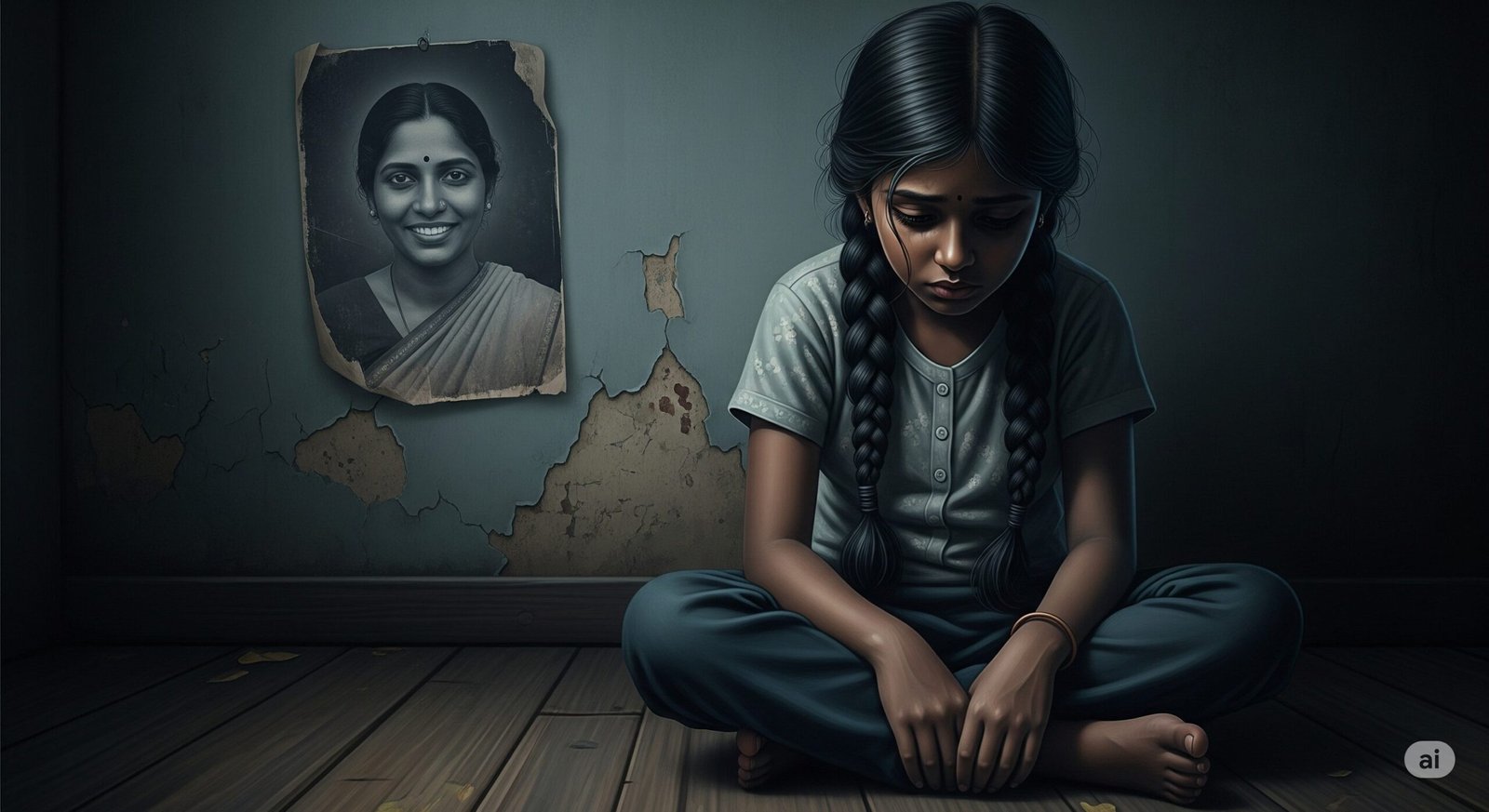
The clinical fallout of maternal loss is a deep injury that affects a girl’s mental health for her entire life. Studies show that losing a parent at a young age is a major cause of mental health problems. This is more than just sadness. It is a deep wound. Without help, this wound can lead to serious depression, constant worry, and Post-Traumatic Stress Disorder (PTSD). For a motherless daughter in India, this pain is often made worse because a girl loses her main female role model. Society also often does not recognize her grief. This leaves her to face her mental health struggles alone. This article will explain the serious clinical fallout and how these problems appear in motherless girls.
The Scars That Don’t Heal
Depression & Anxiety
Motherless daughters face a much higher risk of major depressive disorders and persistent anxiety that can last for years.
Complex PTSD
Symptoms like intrusive thoughts, feeling emotionally numb, and feeling detached from reality are common.
Disenfranchised Grief
Society’s pressure to hide sadness makes her pain feel invalid. This makes the trauma worse and stops her from healing.
The Clinical Fallout of Maternal Loss: Depression in Motherless Daughters
The connection between losing a mother early and clinical depression is proven by research. For a motherless girl, this is not just feeling sad. It is a lasting feeling of hopelessness and being emotionally empty that can continue for many years. A major study from the University of Pittsburgh found that children who lost a parent had twice as much trouble functioning in daily life, both at school and at home. This was true even seven years after the loss. The depression in motherless daughters is made worse by their social situation. In a culture that does not validate their sadness, her real pain is pushed down. This suppression, along with losing her main emotional support, creates a perfect environment for serious depression. This can harm her education, her social life, and her future opportunities.
I felt alone in my sadness.
The Crippling Effects of Anxiety and PTSD from Childhood Bereavement
In addition to depression, motherless girls have a high risk of developing long-term anxiety after parental loss. They are also at high risk for PTSD from childhood bereavement. If a mother’s death is sudden or violent, it can leave a child feeling that the world is always unsafe. This can show up as severe anxiety that makes daily life hard. It can also lead to avoiding social situations and having physical problems like headaches or stomach pain. For girls who see violence that leads to their mother’s death, the trauma is even worse and can result in Complex PTSD. They may have intrusive thoughts, flashbacks of the horrible event, and feel emotionally numb to cope with the pain. The clinical fallout of maternal loss is not just about missing a person. It is about a child’s feeling of safety in the world being completely destroyed.
2-3x Higher Risk
Studies show a 2-3 times higher risk of depression in individuals who have experienced early parental loss, with prevalence rates ranging from 7.5% to as high as 44.67% in some affected groups.
The Triple-Layered Trauma for a Girl in India
The mental health problems from losing a parent are often worse when the child and parent are the same gender. A mother is more than a caregiver; she is her daughter’s main guide for becoming a woman. This makes the clinical fallout of maternal loss a “triple-layered trauma” for a girl in India. First, she feels the pain of losing a parent that anyone would feel. Second, she loses her female role model, leaving her with no guide for growing up. Third, in a society where a girl’s emotional life is often kept within the family, she loses her main source of unconditional love and support. This combination of losses is why the mental health problems that follow are so serious and last so long.
We found that kids who have lost a parent are more than twice as likely than nonbereaved kids to show impairments in functioning at school and at home, even 7 years later.
The Scarcity of Care: A Systemic Failure
These girls have a great need for mental health support, but in India, there is a severe lack of available care. With only 0.3 psychiatrists for every 100,000 people, the chance that a grieving girl will get the therapy she needs is very small. This failure of the system leaves her to deal with her depression, anxiety, and PTSD on her own. The loss of her mother creates a deep emotional vulnerability. Society often makes this worse, which adds to the clinical fallout of maternal loss. This is why it is so important to support NGOs like Children First India that provide counseling. Their work is critical to help reduce this trauma and support the healing of India’s forgotten daughters.
5%
of children
In poorer families, 5% of children lose a parent by age 15, putting a large number of children at risk for severe mental health problems without the support they need.
The clinical fallout of maternal loss is not a short-term sadness. It is a major mental health crisis that can affect a girl’s entire life. The high risks of depression, anxiety, and PTSD are not personal weaknesses. They are the expected results of a deep trauma made worse by a society that does not help. It is our duty as a society to see this problem and provide caring, trauma-focused help to those who need it.