
Child Protection Policy in India: A Call to Action for Girls
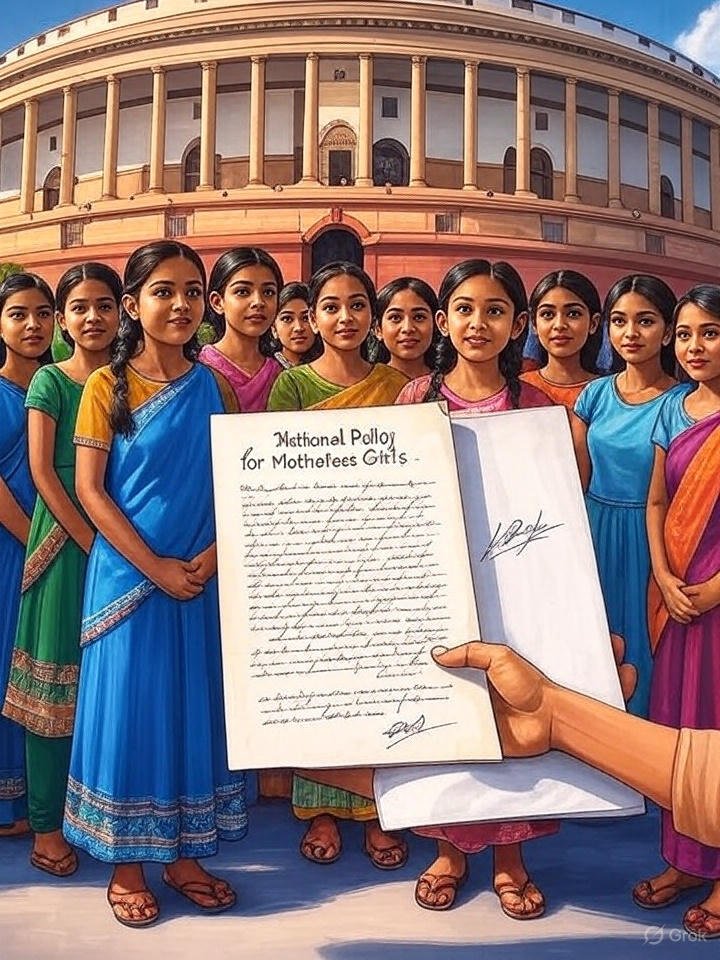
While the efforts of NGOs and civil society are essential, the ultimate responsibility for protecting vulnerable children lies with the state. A robust and proactive child protection policy India is the only way to ensure that the rights and safety of every motherless girl are systematically protected. This is a call to action for the state to move beyond broad policies and create specific, targeted interventions that address the unique constellation of risks these girls face. This article outlines key policy recommendations for girls and highlights the potential of existing government schemes for girls to be adapted to create a comprehensive safety net.
A Call to Action for the State
Recognize “Motherless-ness”
Amend laws to recognize “motherless-ness” as a specific category of vulnerability, triggering automatic protection protocols.
Targeted Financial Support
Adapt schemes like the Sukanya Samriddhi Yojana to provide direct, conditional financial aid to kinship caregivers.
Strengthen Monitoring
Empower and fund community bodies like Child Welfare Committees to proactively monitor the well-being of every registered motherless girl.
Policy Recommendations for Girls: Acknowledging a Unique Vulnerability
The first and most critical policy change is for the law to formally recognize “motherless-ness” as a specific category of vulnerability. Currently, a motherless girl often falls into a legal void; she is not technically an orphan if her father is alive, and she is not formally in the care system if she is living with relatives. Amending the Juvenile Justice Act and other child protection laws to include this category would be a game-changer. It would trigger an automatic and mandatory response from the state, including an assessment of her living situation, her educational status, and her physical and emotional well-being. This simple legal reclassification is the foundation for building an effective safety net.
Policy must be based on reality, not on idealized notions of family.
Adapting Government Schemes for Girls: From Broad Strokes to Targeted Support
India has several progressive government schemes for girls, such as the Sukanya Samriddhi Yojana, which encourages parents to save for a daughter’s education and marriage. However, these schemes are not specifically designed to address the crisis that follows a mother’s death. A crucial policy recommendation is to adapt these schemes to provide direct support in such cases. For example, upon the death of a mother, a portion of these funds could be released to the legal guardian under strict conditions, such as ensuring the girl’s continued education. This would provide immediate financial relief to the caregiving family, reducing the economic pressure that often leads to neglect and early marriage. It would transform these schemes from long-term savings plans into active tools for protection.
Sukanya Samriddhi Yojana
With over 3 crore accounts opened, schemes like the Sukanya Samriddhi Yojana have immense reach. Adapting them for targeted support to motherless girls could have a massive impact.
Strengthening the Front Lines: Empowering Child Welfare Committees
An effective child protection policy India needs strong local implementation. The Child Welfare Committees (CWCs), established under the Juvenile Justice Act, are meant to be the primary body for protecting children at the district level. However, they are often underfunded, understaffed, and lack the authority to intervene effectively in kinship care situations. A key call to action for the state is to strengthen these committees. This means providing them with the necessary resources and legal mandate to proactively monitor the well-being of every registered motherless girl in their district. They should be empowered to conduct regular home visits, speak with the child privately, and take swift action if any signs of neglect or abuse are detected.
The state has the ultimate responsibility to protect its children.
A Call for a National Mission
The challenges faced by motherless girls are a national crisis that deserves a national response. We need a “National Mission for the Welfare of Motherless Girls,” a coordinated effort led by the Ministry of Women and Child Development. This mission would oversee the implementation of legal reforms, the adaptation of government schemes, and the strengthening of local child protection bodies. It would work in close partnership with NGOs and civil society to ensure that support reaches the last mile. By elevating this issue to the level of a national mission, we can send a powerful message that the state will no longer allow these vulnerable children to fall through the cracks.
30 Million
Orphans in India
The sheer scale of the orphan crisis in India, with 30 million children affected, makes a coordinated, state-led response not just a policy choice, but a moral imperative.
A proactive and compassionate state is the ultimate guardian of a motherless child. While NGOs and communities play a vital role, it is the state that has the power and the responsibility to create a legal and social framework that guarantees protection. This call to action is a plea for the state to fulfill that responsibility, to close the gaps in its policies, and to build a true and effective safety net for every daughter who has lost her mother.