Burden of strenuous work at an early age in Motherless Girls: Forced into Adulthood
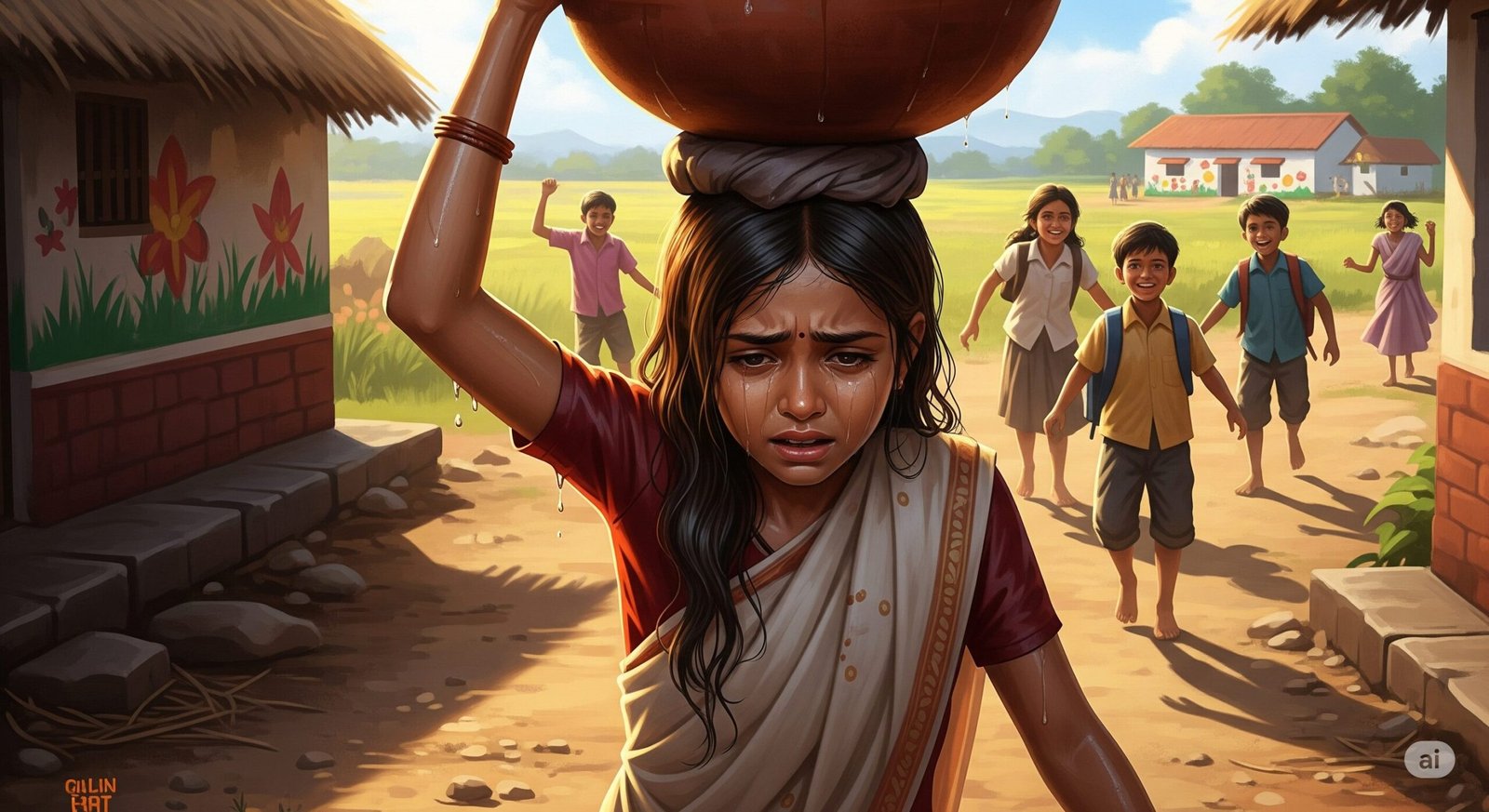
When a mother dies in an Indian household, her domestic responsibilities do not disappear; they are often immediately placed on the shoulders of her eldest daughter. The burden of strenuous work at an early age is a crushing reality for these girls. Regardless of her age, a motherless girl is expected to become the new homemaker, a role that comes with a heavy physical toll of domestic duties. This is not just helping with chores; it is a full-time, unpaid job that takes a significant toll on her developing body, a situation made worse by the dangers of poor sanitation for girls in many communities.
The Physical Cost of a Lost Childhood
strenuous work at an early age
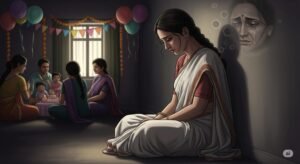
A daughter is forced to become a full-time homemaker, taking on cooking, cleaning, and caring for siblings, ending her childhood.
Physical Toll
Strenuous work like carrying heavy water loads leads to chronic pain, injuries, and exhaustion in a developing body.
Poor Sanitation Risks
The lack of safe and private toilets increases the risk of illness and assault, adding another layer of danger to her daily life.
The Physical Toll of Domestic Duties on a Young Body
The physical demands of this new role are constant. The work is often strenuous, involving carrying heavy loads of water, grinding spices by hand, and spending long hours in physically difficult postures. This is especially true in rural areas, where girls also have to do heavy work in agriculture in addition to their domestic duties. This constant physical work, combined with the poor nutrition that often comes with her neglected status, can lead to a number of health problems. She is at risk for chronic back pain, injuries from repetitive tasks, and exhaustion. Her physical growth, which may already be affected by malnutrition, can be further harmed by the physical stress of her labor. The physical toll of domestic duties is a direct result of her mother’s absence, a daily reminder of her lost childhood.
I learned hygiene the hard way.
Poor Sanitation for Girls: A Hidden Danger
The burden is made worse by the realities of poor sanitation for girls in many parts of India. With 91% of orphanages being non-governmental, there is little oversight to ensure proper facilities. For a girl who has taken on domestic responsibilities, the lack of a safe and private toilet at home adds another layer of risk to her daily life. This is particularly true during menstruation, when the need for privacy and hygiene is greatest. The lack of proper sanitation facilities not only increases her risk of infections but also her vulnerability to harassment and assault. This constant stress takes a toll on both her physical and mental health, adding to the immense weight she already carries.
91% Non-Governmental
With 91% of orphanages in India being non-governmental, there is a severe lack of oversight and resources to ensure proper sanitation and hygiene for vulnerable children, especially girls.
Education Sacrificed for the Burden of strenuous work at an early age
The burden of strenuous work at an early age also has a direct and devastating impact on her education. The time and energy needed for domestic work leave little room for schooling. As studies on the impact of maternal mortality show, older children, particularly girls, are more likely to drop out of school to manage the household. This not only ends her educational journey but also traps her in a cycle of domestic servitude. Her body becomes a tool for the family’s survival, while its own needs for rest, growth, and development are ignored. The physical toll of these duties is a daily reminder of her lost childhood and her forced entry into a life of unpaid labor.
The time and energy consumed by domestic work leave little room for schooling.
The Need for Protective Interventions
To protect these girls, we need interventions that address both the economic and social pressures that force them into strenuous work at an early age. This includes providing financial support to families to reduce the need for their daughters to work. It also means creating community-based programs that challenge the idea that a daughter’s primary role is domestic. Educational support, such as flexible schooling options and scholarships, can help girls stay in school even when they have responsibilities at home. By recognizing the severe physical toll of domestic duties, we can create systems that protect a girl’s right to a healthy childhood and a future defined by her potential, not by her labor.
2x
More Likely
Adolescent girls who lose their mothers are nearly twice as likely to be engaged in full-time domestic labor compared to their peers, according to a report by CRY (Child Rights and You).
The burden of strenuous work at an early age is a heavy weight on the developing bodies of motherless girls. It is a direct consequence of a mother’s death, a physical manifestation of a society that devalues its daughters. By understanding the deep connection between this labor, poor sanitation, and a girl’s lost future, we can work to create a world where every daughter is free to grow, learn, and thrive.