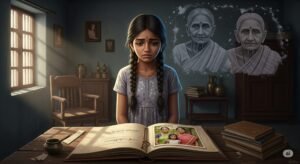
Kinship Care vs. Institutionalization: The Family’s Dilemma

When a mother dies, her family faces a difficult decision: who will care for her children? The debate over kinship care vs. institutionalization is a complex one, filled with emotional and practical challenges. In India, there is a strong cultural preference for keeping children within the family. However, the reality of poverty and lack of resources creates an extended family’s dilemma. While kinship care is often seen as the better option, it can have its own problems, including the risk of neglect. This article explores the difficult choice families face and the challenges of kinship care for a motherless daughter.
The Extended Family’s Dilemma
Kinship Care
Culturally preferred, but often leads to financial strain on relatives and potential neglect for the child.
Institutionalization
Offers structure and basic needs but often lacks the emotional connection and love of a family environment.
The Financial Burden
Poverty is the main reason why relatives are often unable to provide adequate care, turning a loving home into a place of neglect.
Kinship Care vs. Institutionalization: The Ideal vs. The Reality
On the surface, kinship care seems like the obvious best choice. Research consistently shows that children raised by relatives have better mental health and developmental outcomes than those in institutions. They maintain a connection to their family, community, and culture. However, the reality of kinship care in India is often far from ideal. The biggest challenge is poverty. A family that is already struggling to feed its own children may not have the resources to care for another. This financial strain can turn a well-intentioned act of love into a situation of neglect, where the motherless girl becomes a social orphan in India—a child with a family but without real care.
We loved her, but we could not afford to feed her.
The Challenges of Kinship Care: More Than Just a Home
The challenges of kinship care go beyond just money. The caregivers, often grandparents, may be too old or in poor health to provide the energetic care a child needs. They may also be dealing with their own grief, which can make it hard for them to offer emotional support to the child. Furthermore, the motherless girl may be treated differently than the other children in the home, leading to feelings of isolation and worthlessness. While the home provides a sense of family, it can also become a place of silent suffering, a reality that is often invisible to the outside world.
Only 370,000 in Institutions
Of the 30 million orphaned children in India, only 370,000 are in institutional care, meaning the vast majority are in informal kinship arrangements, many of which lack support and oversight.
The Cold Comfort of an Institution
In some cases, an institution may seem like a better option. It can provide consistent meals, a safe place to sleep, and access to education. However, institutional care comes at a high emotional cost. Children raised in orphanages often suffer from a lack of individual attention and emotional connection, which can lead to developmental delays and attachment issues. While their basic needs may be met, their need for love and a sense of belonging often is not. The choice between a loving but poor home and a stable but impersonal institution is the heartbreaking dilemma that many extended families face.
Children in kinship care often have better outcomes, but only if the caregivers are supported.
The Path Forward: Supporting the Extended Family
The best solution is not to choose between two flawed options, but to strengthen the better one. To make kinship care a truly viable option, we must provide support to the extended family. This includes financial assistance to ease the economic burden, as well as access to counseling and support services for both the caregivers and the child. Community-based programs can offer a network of support, helping to reduce the isolation that these families often feel. By investing in kinship care, we can help ensure that a motherless girl grows up in a loving and supportive environment, with the best possible chance of a healthy future.
89%
Live with a Single Parent
In India, 89% of children in single-parent households live with a surviving parent, but this statistic hides the reality that many are still sent to live with relatives due to economic and social pressures.
The dilemma of kinship care versus institutionalization is a heavy burden for the extended family of a motherless child. By recognizing the immense challenges these families face and by providing them with the necessary financial and emotional support, we can help them provide the loving and stable home that every child deserves.