
Menstrual Health of Motherless Girls: The Hygiene Deficit
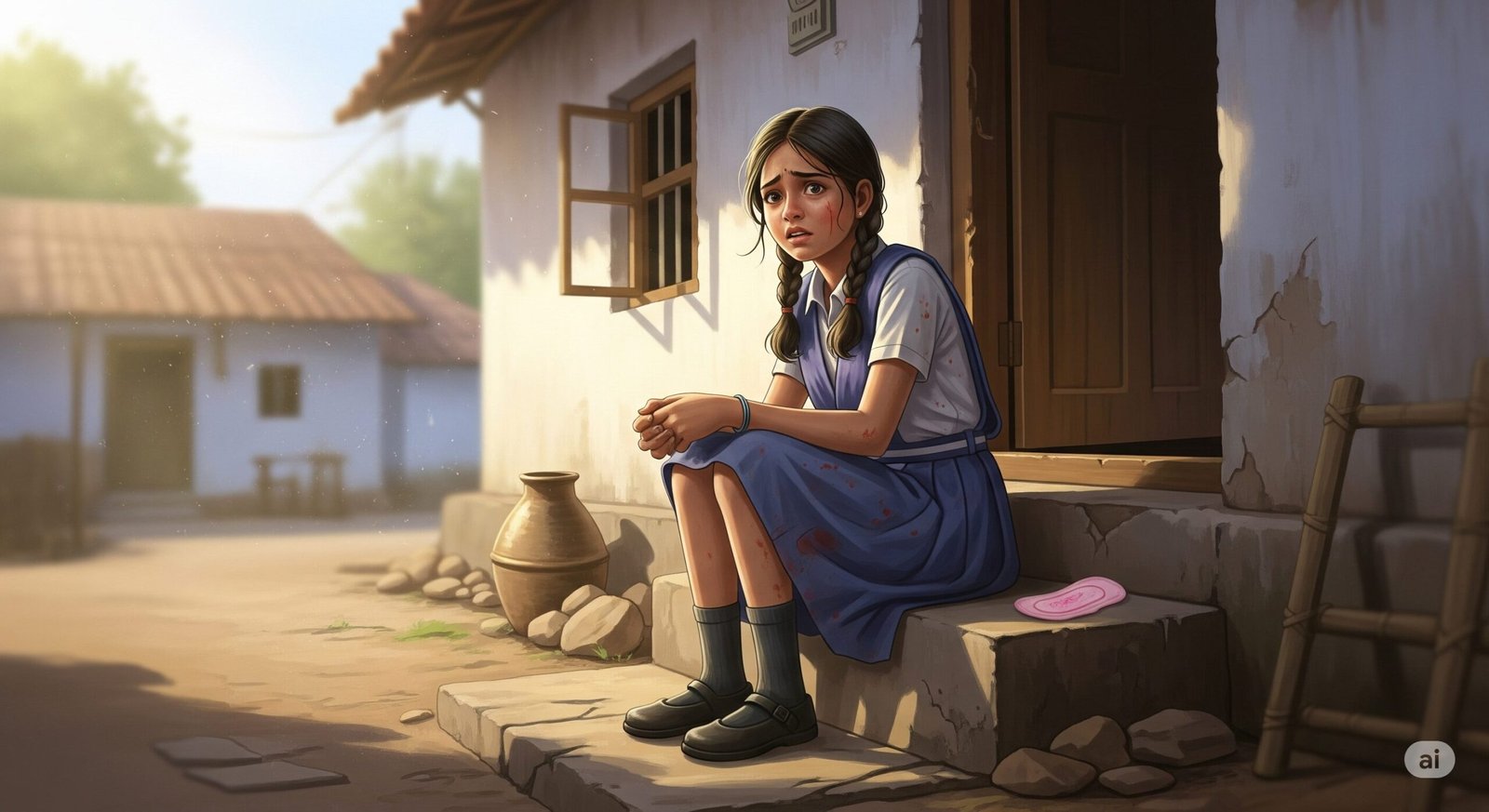
For a young girl in India, the start of menstruation is a major biological and social event. It marks her transition to womanhood. Traditionally, a mother guides her daughter through this important time. The poor menstrual health of motherless girls is a silent crisis that turns this natural process into a scary and lonely experience. Without a mother’s support, a girl often faces her first period with fear, confusion, and a dangerous hygiene deficit. This article explores how this rite of passage becomes a source of trauma and health risks for a girl who has lost her mother.
A Rite of Passage Without a Guide
Fear and Confusion
Without a mother’s guidance, a girl’s first period is often a shocking and frightening event, leading to shame and anxiety.
Hygiene Deficit
Lack of knowledge about proper menstrual hygiene increases the risk of serious reproductive and urinary tract infections.
Educational Barriers
Fear of staining clothes and lack of proper facilities lead to high rates of school absenteeism among girls during their periods.
Menarche: A Rite of Passage Without a Guide
The experience of a motherless girl facing her first period is a stark example of a rite of passage without a guide. Studies in India show that even with mothers present, many girls lack proper knowledge about menstruation. One girl in a study reported that she thought she had cancer when she first saw blood. For a girl without a mother, this information gap is almost total. She is forced to deal with this major change in her body alone, often thinking she is sick or injured. The lack of emotional support turns a natural milestone into a source of intense anxiety and shame, deepening the hygiene deficit that puts her health at risk.
I was scared and alone.
The Health Consequences of the Hygiene Deficit
The poor menstrual health of motherless girls has serious consequences. Without knowledge of proper menstrual hygiene management, they are at a higher risk for reproductive and urinary tract infections. The practical challenges are also huge. In many poor households, getting sanitary products is difficult. A mother would normally get these for her daughter. Without her, a girl may be forced to use unsafe materials like old rags, which increases her risk of infection. Furthermore, menstruation in India is surrounded by cultural taboos. Menstruating girls are often seen as “impure” and are isolated from social and religious activities. A mother helps her daughter understand these complex rules. Without her, the girl faces the stigma alone, which can lead to severe psychological distress.
50% Lack Education
According to UNICEF, 50% of girls in India lack adequate menstrual health education, a number that is much higher for motherless girls, leading to fear, shame, and health risks.
Educational Barriers and Growth Delays in Girls
The social and psychological impact of this neglect is severe. The fear of staining clothes or being teased can lead to high rates of school absenteeism. Research shows that 40% of adolescent girls miss school during their periods. This missed school time contributes to growth delays in girls, not just physically, but also in their education and personal development. This sets them back academically and reinforces the idea that their bodies are a source of shame and a barrier to their progress. The loss of a mother, therefore, has a direct impact on a girl’s ability to get an education and escape the cycle of poverty.
Nearly 65% reported that menstruation affected their daily activities at school and that they had to miss their class tests and classes.
The Need for School and Community-Based Intervention
To address the poor menstrual health of motherless girls, intervention must happen at the school and community levels. School-based programs that provide comprehensive menstrual health education are essential. These programs can fill the information gap left by a mother’s absence and create a safe space for girls to ask questions without shame. Providing free or subsidized sanitary products in schools is another critical step. This can reduce absenteeism and ensure that girls can manage their periods with dignity. Community awareness campaigns are also needed to challenge the harmful taboos and stigmas surrounding menstruation. By educating both men and women, we can create a more supportive environment where a girl’s natural biological processes are not a source of shame or a barrier to her future.
40%
Absenteeism
40% of adolescent girls in India miss school during their periods, a number that is significantly higher for motherless girls who lack proper guidance and resources.
The menstrual health of motherless girls is a critical issue that has a profound impact on their physical and emotional well-being, as well as their education. By recognizing the hygiene deficit created by the loss of maternal guidance and implementing targeted support systems, we can ensure that this natural rite of passage is not a traumatic event but a healthy and supported step into womanhood.