Motherless Girl is The Social Orphan in India: Isolation, Stigma & Neglect
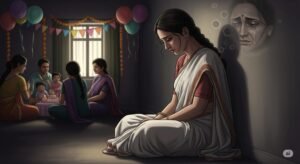
In the Indian family structure, a mother is the emotional center. Her death does more than leave a void; it shatters the family’s core, leading to chaos and deep instability. The surviving father, often overwhelmed by his own grief and unprepared for primary caregiving, is unable to manage the household. This breakdown often leads to children being sent to live with relatives, a decision that creates a new kind of vulnerable child: the social orphan in India. A social orphan is a child who has a living parent but lacks the necessary care and emotional support of a family. This article explores the painful reality of the social isolation of girls in this situation, the difficulties of kinship care challenges, and the profound impact of their unacknowledged sorrow, a form of disenfranchised grief.
The Making of a Social Orphan
Family Fragmentation
After a mother’s death, the family structure often breaks down, leading to children being sent away to relatives.
The Outsider Status
The girl exists in a state of limbo, not fully part of the new family and often viewed as a financial and emotional burden.
Community Rejection
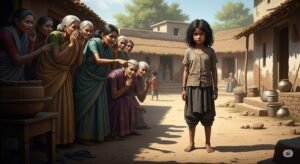
The stigma of being motherless leads to avoidance by friends and neighbors, deepening the girl’s sense of isolation.
A State of Limbo: The Social Isolation of Girls
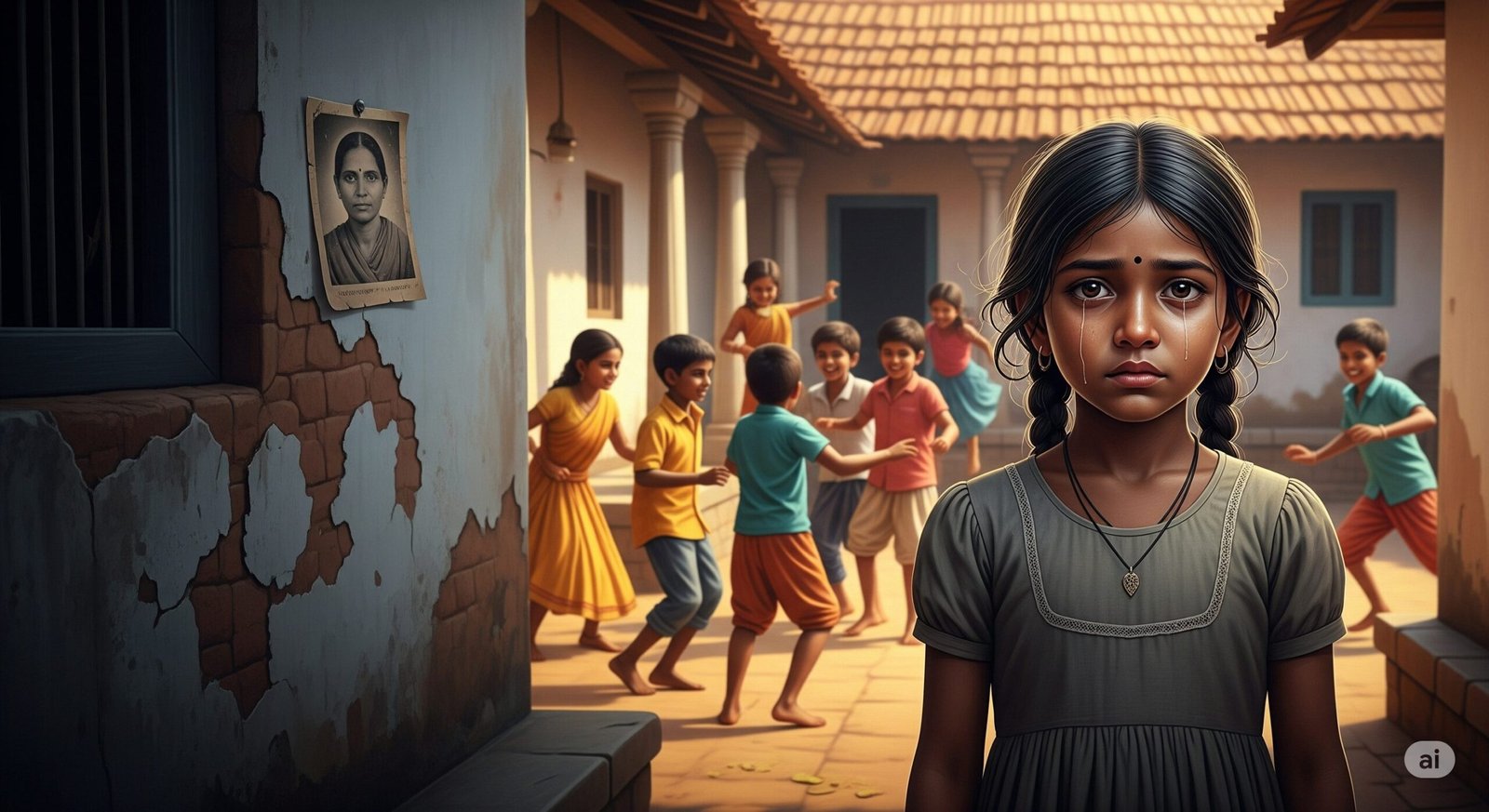
When a motherless girl is sent to live with relatives, she enters a strange and uncertain world. She is no longer part of her own family but is not fully accepted into the new one. Personal stories show how deep this confusion goes. One woman, raised by her aunt, described her childhood as being “marred by constant confusion” about who she was and where she belonged. This feeling of being an outsider is often made worse when relatives see her as a burden. While some may provide good care, many view her as just another mouth to feed in a house that is already struggling. This leads to a painful reality of social isolation of girls, where they are treated differently than the other children and may suffer from emotional abuse.
I existed in a state of limbo, yearning for the sense of belonging my cousins enjoyed but was denied to me.
Community Rejection and the Stigma of “Fate”
The stigma of being motherless often leads to rejection from the wider community. Friends, neighbors, and even extended family may pull away, not because they are unkind, but because they are uncomfortable. They don’t know what to say to a child who has faced such a tragedy. This social avoidance makes the girl feel like an outcast. She learns that her grief is something to hide because it makes others uncomfortable. This is a heavy weight for a child to carry. Studies on bereaved children show that 65% exhibit persistent psychological symptoms, struggling with social integration. In many Indian communities, this suffering is dismissed as her “fate,” which frees the family and community from their duty to care for her. This fatalistic view is a major barrier to helping a social orphan in India, as it prevents others from stepping in to stop neglect or abuse.
65% Persistent Symptoms
Research shows that 65% of children who have lost a parent continue to show psychological problems, struggling to fit in socially as a result of their loss and the community rejection they face.
Kinship Care Challenges: The Invisible Child
While kinship care is often seen as the best option, it comes with its own set of kinship care challenges. Research shows that children cared for by close biological relatives, like grandparents, generally do better than those placed with more distant family. For a motherless girl, this is critical. But even in the best kinship situations, she can become a “social orphan”—a child who is invisible to the system. Because she is living with family, child protection services are unlikely to get involved, even if she is being neglected. Her pain and her needs go unnoticed. She is trapped in a disorienting reality where she has a father who is absent and a home that doesn’t feel like her own.
Grief is a shadow that follows motherless daughters everywhere.
The Need for Community-Based Support
To combat the social isolation of a social orphan in India, community-based interventions are essential. The community must be educated to see a motherless girl not as a burden or a symbol of bad luck, but as a child who needs their collective care. Organizations like Bal Raksha Bharat are working to create safe spaces for these girls. By establishing peer support groups and challenging harmful stigmas, they help girls rebuild connections and find their voice. These interventions are crucial for helping a girl process her disenfranchised grief and feel a sense of belonging again. It is a way to ensure that the community becomes a source of support, not a source of pain.
31 Million
Orphaned Children
According to UNICEF, India is home to 31 million orphaned children. Many of these, even with a living parent, become social orphans, facing stigma and neglect within their communities.
The creation of a social orphan is a tragic consequence of a mother’s death in India. It is a profound failure of both family and community, which leaves a girl feeling isolated, ashamed, and without a sense of belonging. By understanding the deep-seated nature of this stigma and working to create supportive, community-based solutions, we can begin to mend the broken family unit and ensure that no child has to endure their grief alone.